
>>I am brazilian and I speak portuguese, so forgive my english, I’ll use translator tools to help<<
INTRO:
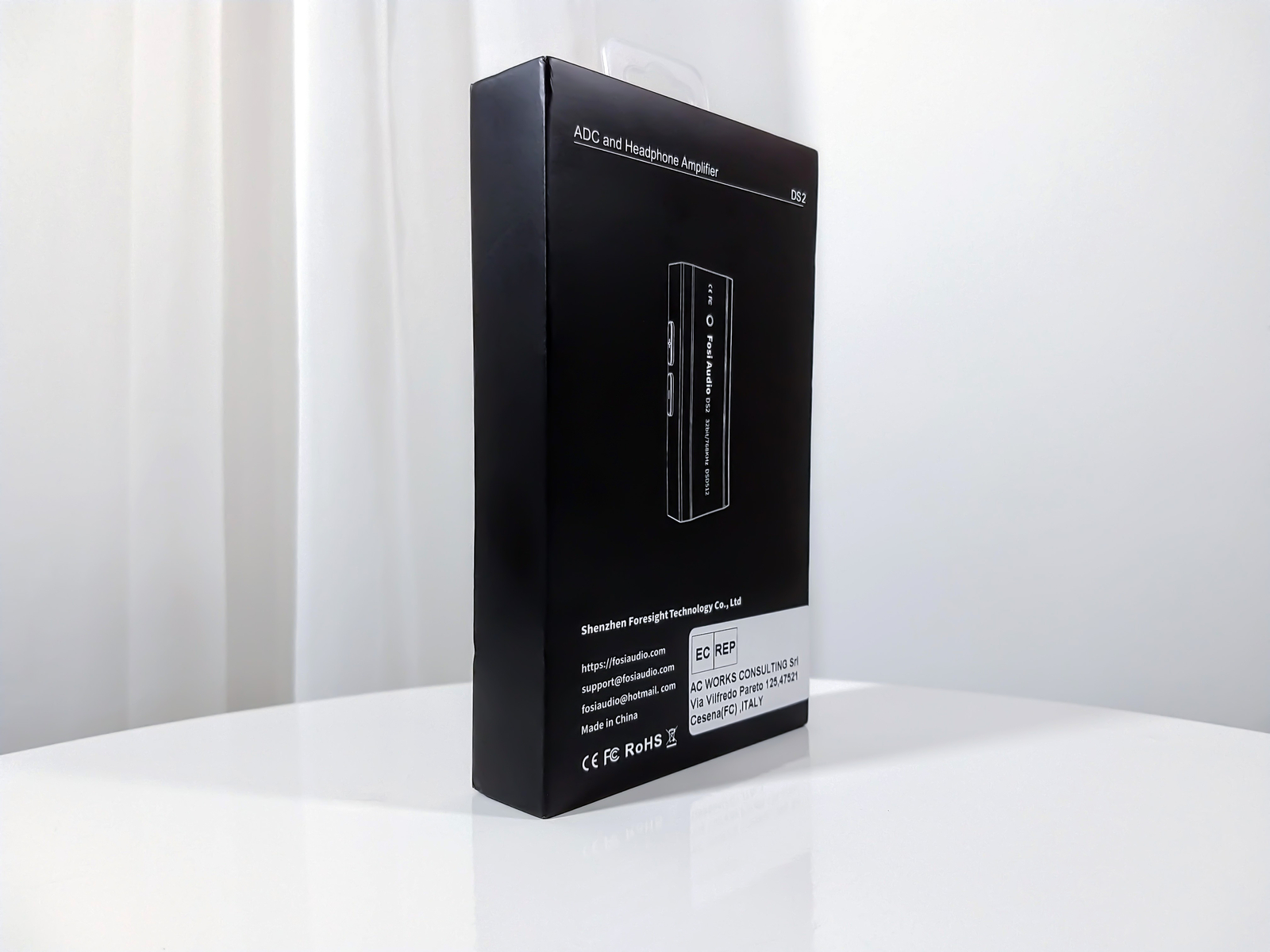
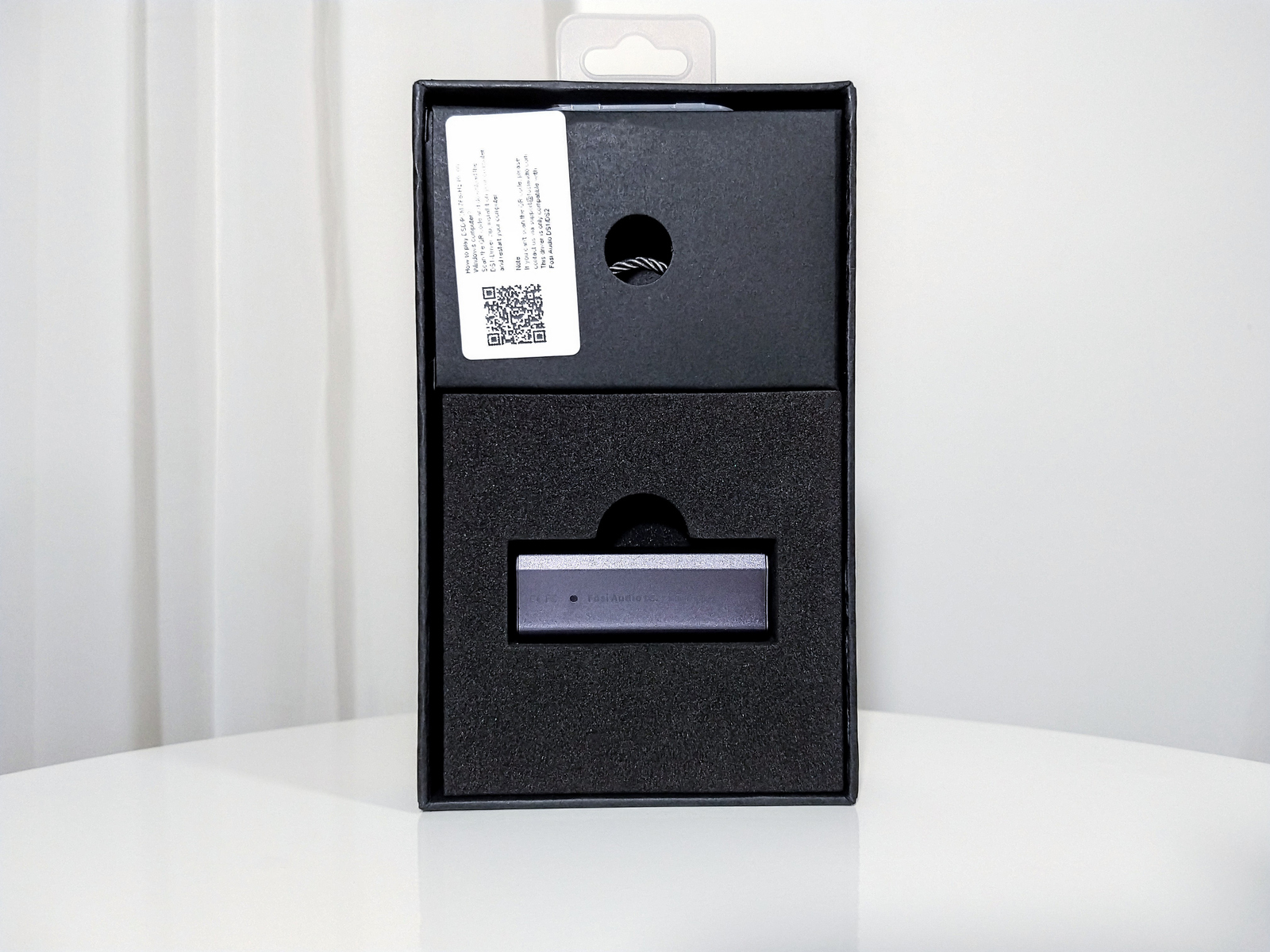
FOSI AUDIO is a Chinese company that manufactures various products such as DAC/AMP, DACs, Amplifiers, dongles, soundbars, etc. This is the first time I have the opportunity to review a product from the brand, and the equipment in question will be the DAC/AMP Dongle FOSI AUDIO DS2. The DS2 follows the new classes of dongles with 3.5mm SE and 4.4mm Balanced output. Currently the DS2 has the lowest price of these dongles with the 3.5mm & 4.4mm configuration (if not the cheapest, then it’s among them).
Official price: $59.99 USD
Colors: Gray or Red
FOSI AUDIO store:
https://s.click.aliexpress.com/e/_Dlsj6Uj
SPECIFICATIONS:
– DAC Chip: ESS ES9038Q2M
– Input: USB-C
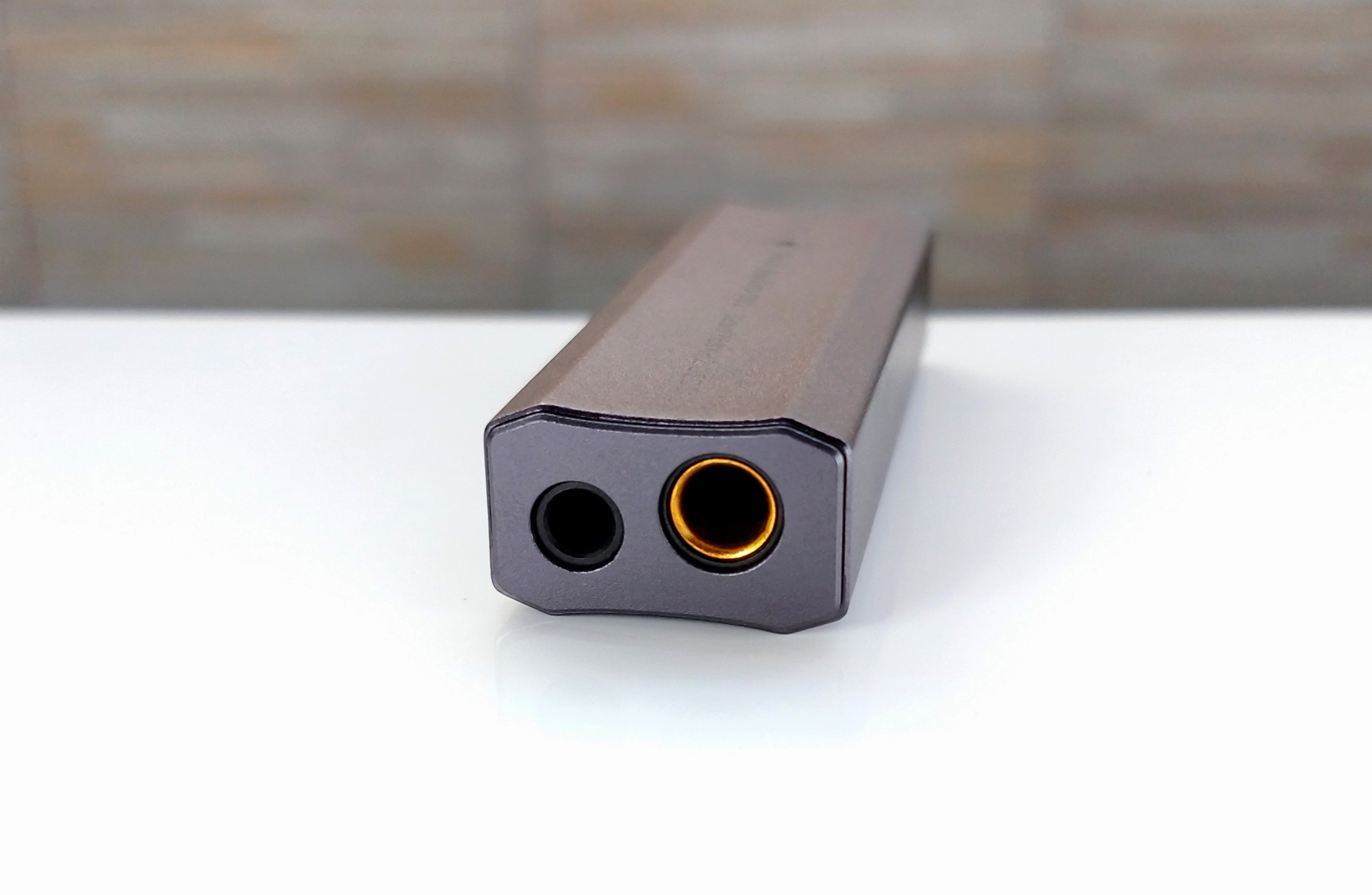
– Outputs: 3.5mm and 4.4mm balanced
– Frequency response: 20Hz – 20kHz +/-0.5dB
– Power output 3.5mm: 120mW@32Ω
– Power output 4.4mm: 250mW@32Ω
– Impedance range: 16Ω – 300Ω
– THD+N: ≤0.0006%
– SNR: ≥108dB
– Dynamic range: 108dB
– Supports: PCM 32-Bit/768kHz, DSD64/128/256/512
– OS compatible: iOS/Android/Windows/Mac
– Cables included: USB-C<>USB-C (12.5cm)
– Adapter included: USB-C>USB-A
– Size: 5.5cm[H] x 2cm[W] x 1.2cm[D]
– Material: Tin alloy
– Weight: 15g
DEVICES USED:
– Tin HiFi P1
– Aune Jasper
– Questyle M15
– MotoZ3Play
– Dell Inspiron (W10)



PHYSICAL ASPECTS:
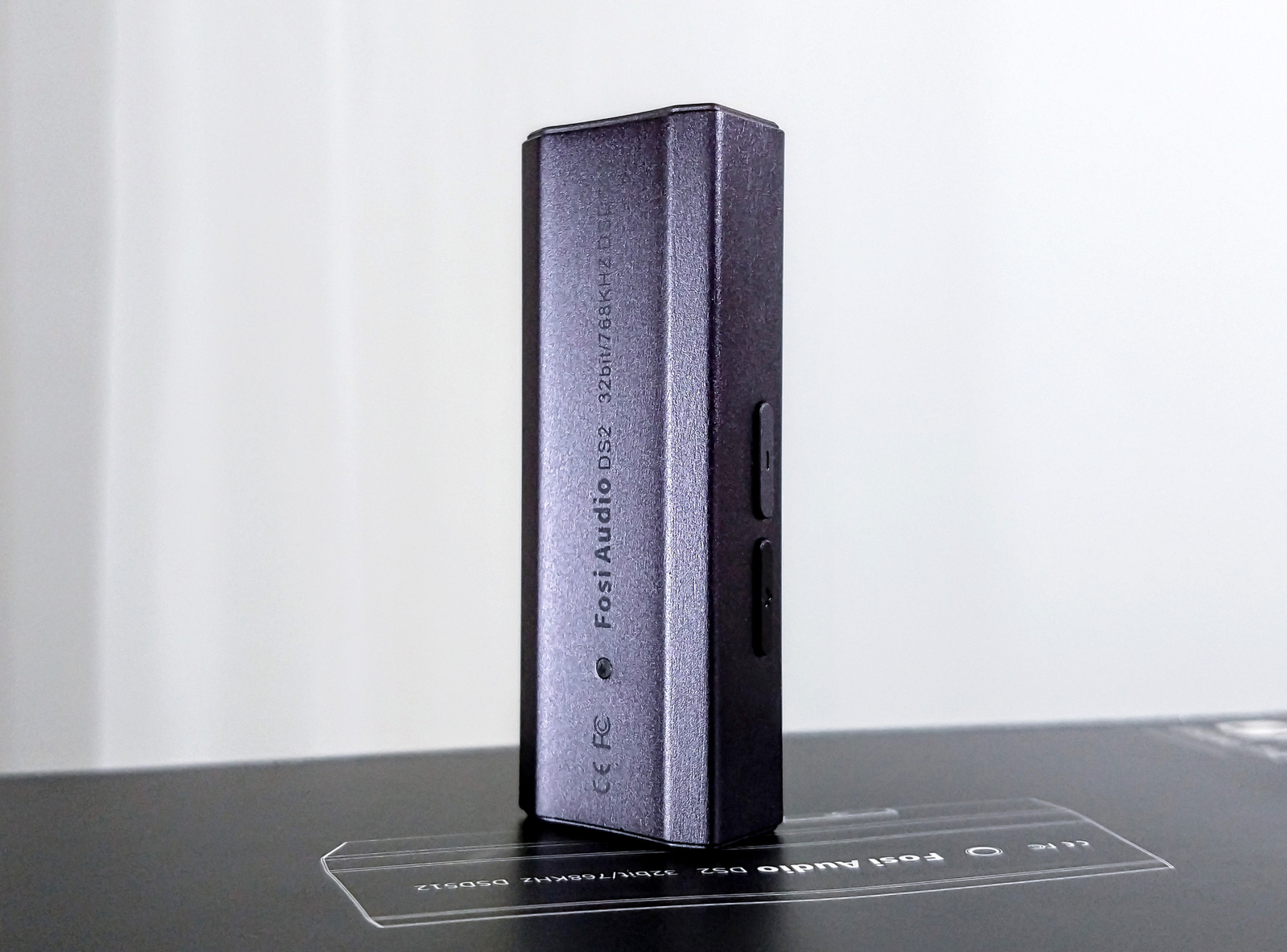
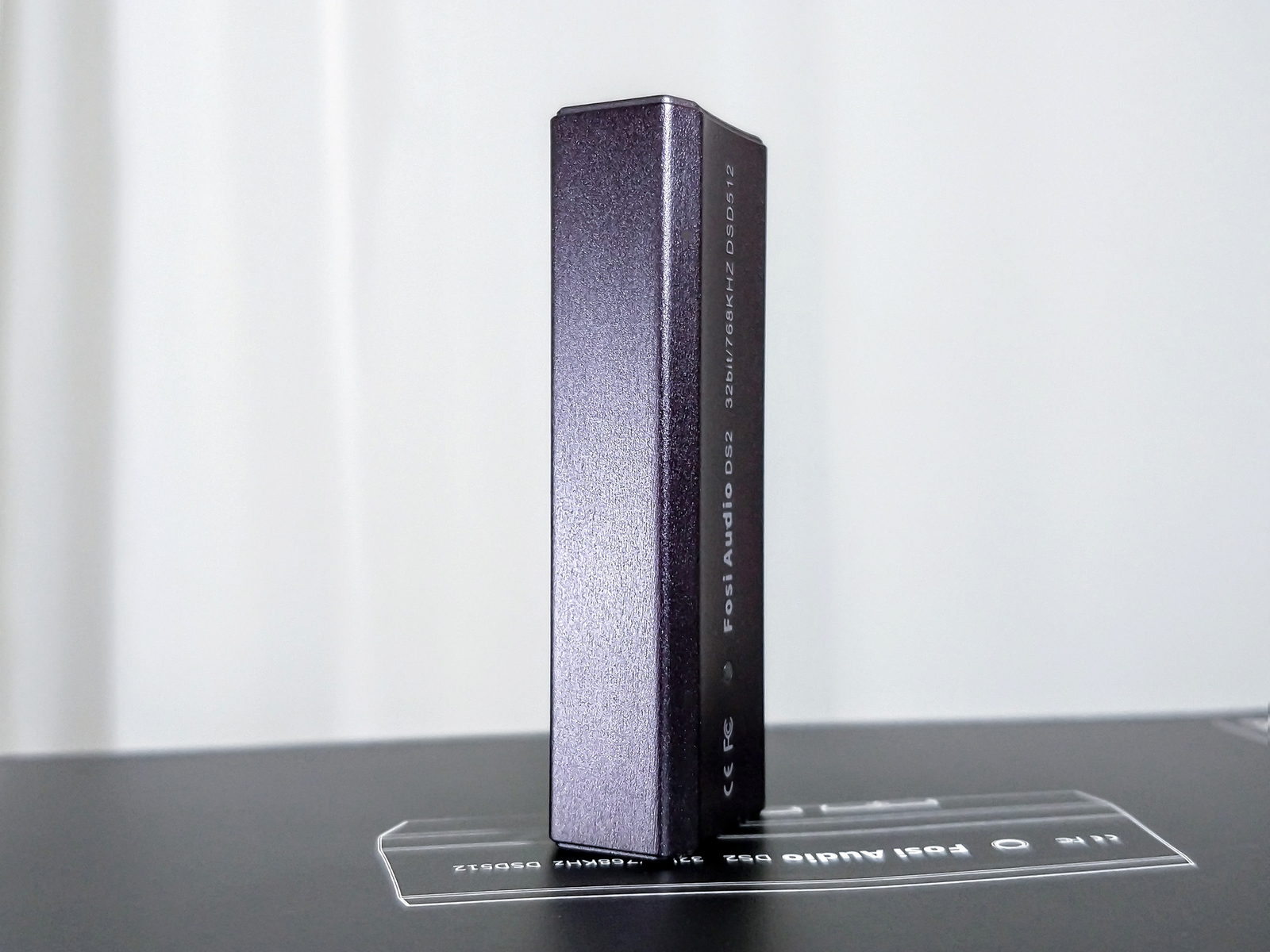
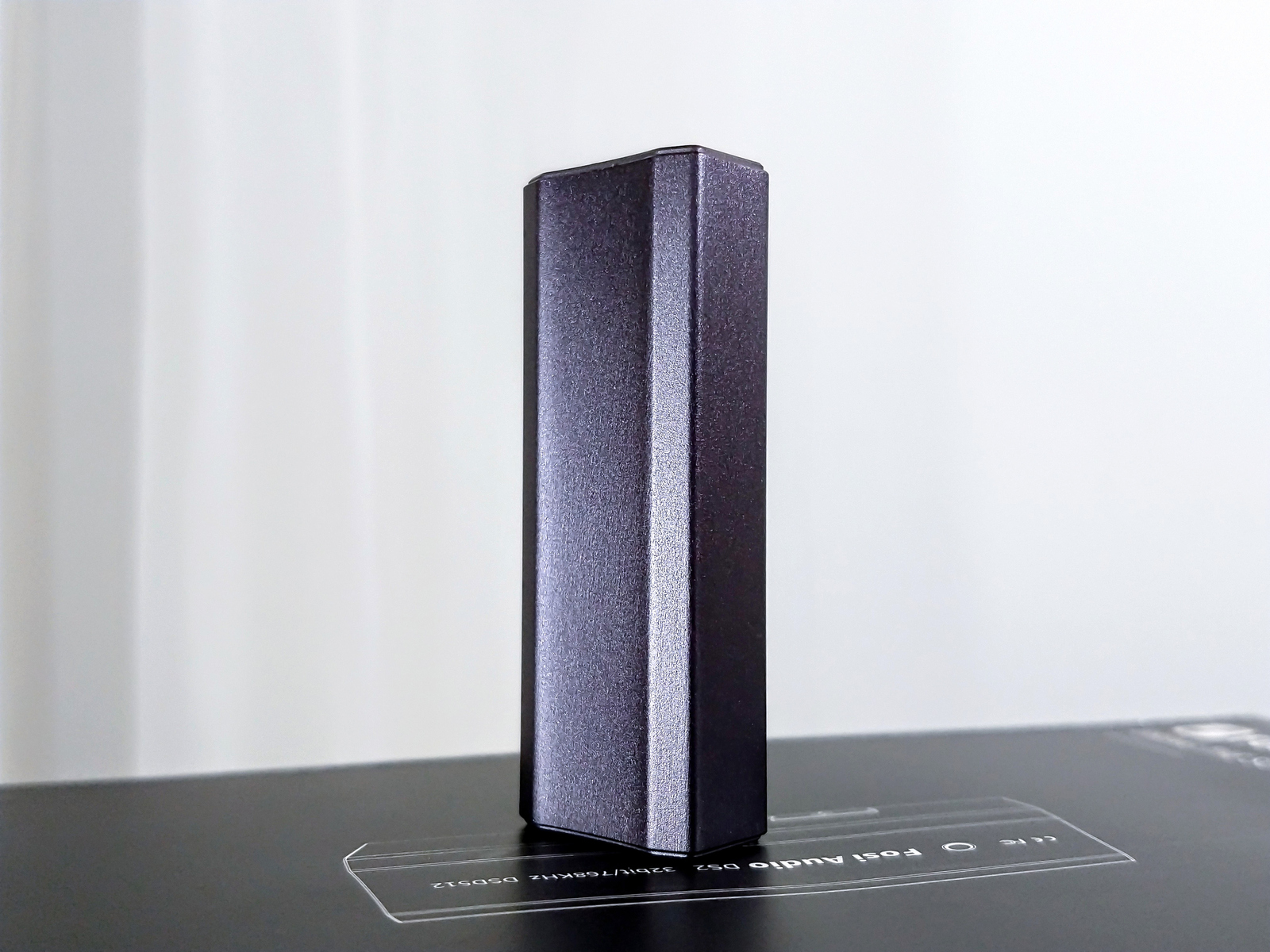
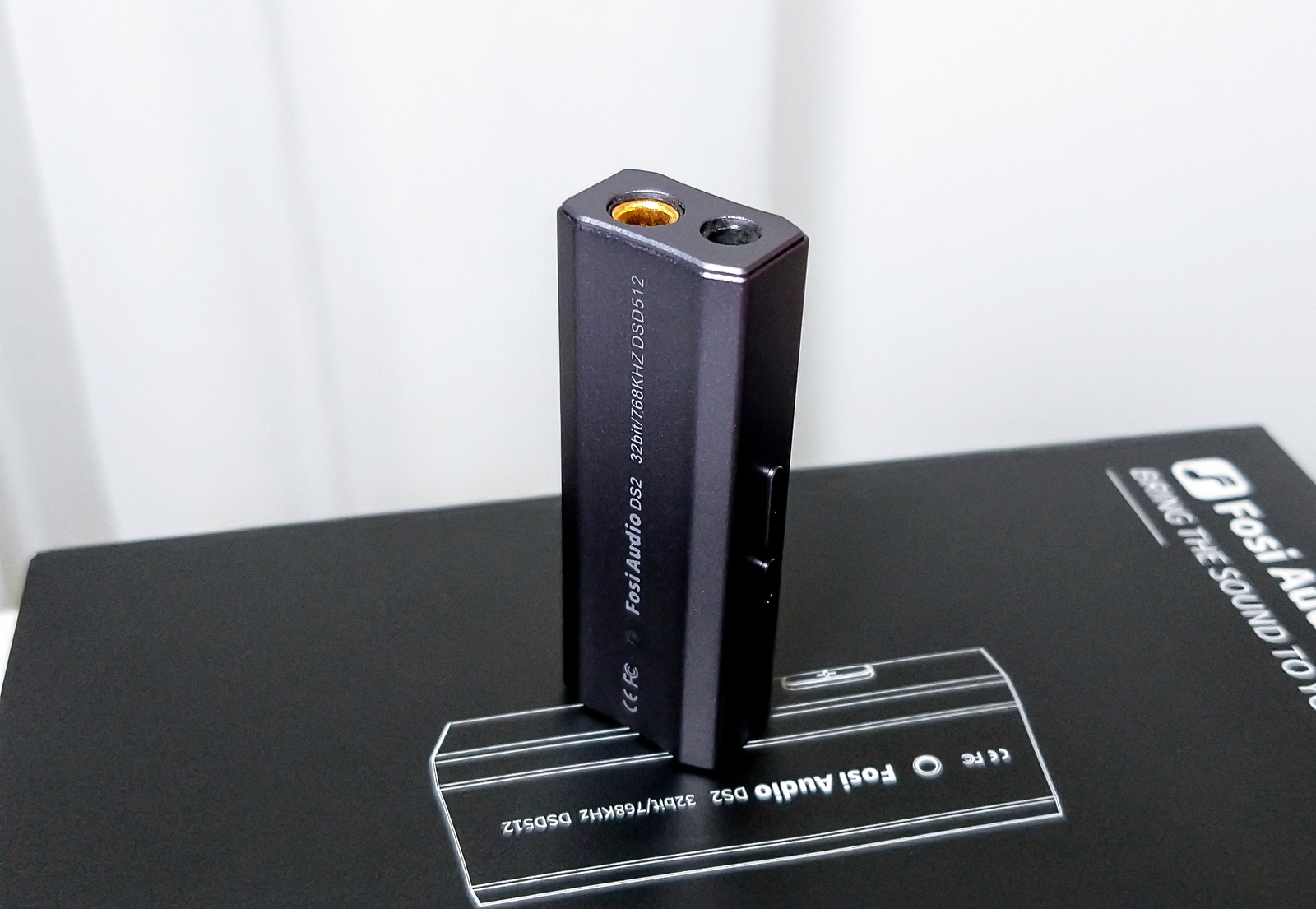
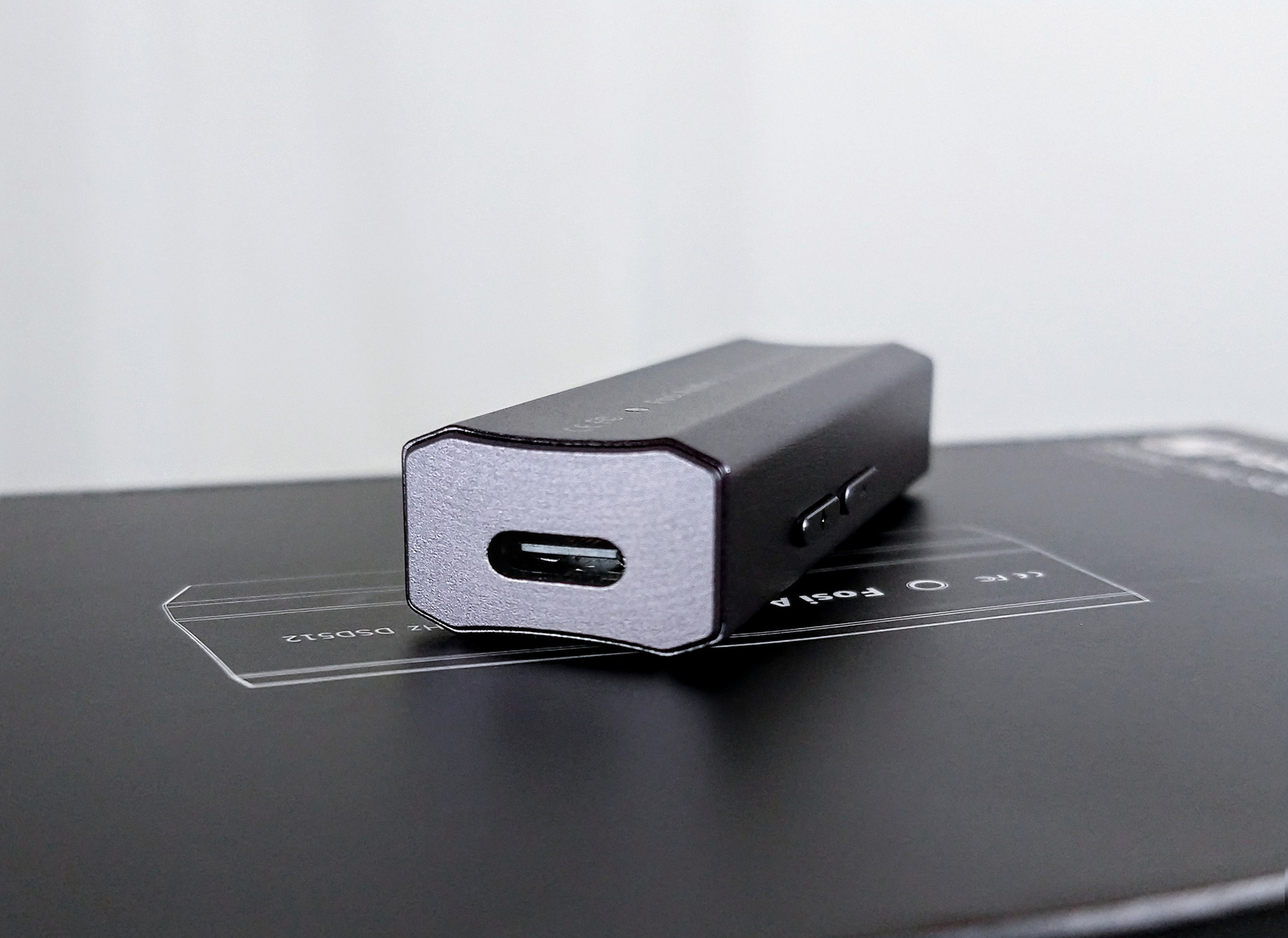
Let’s talk about my impressions of the DS2 in construction and design aspects. As you can see in the pictures, the dongle is very compact and very portable. It’s all made of metal (tin alloy). The design is somewhat simple, but I really liked it, for me, the more minimalist, the better. A positive point of having a simpler design is that the chances of the product accumulating dust and then getting a dirty look are reduced.
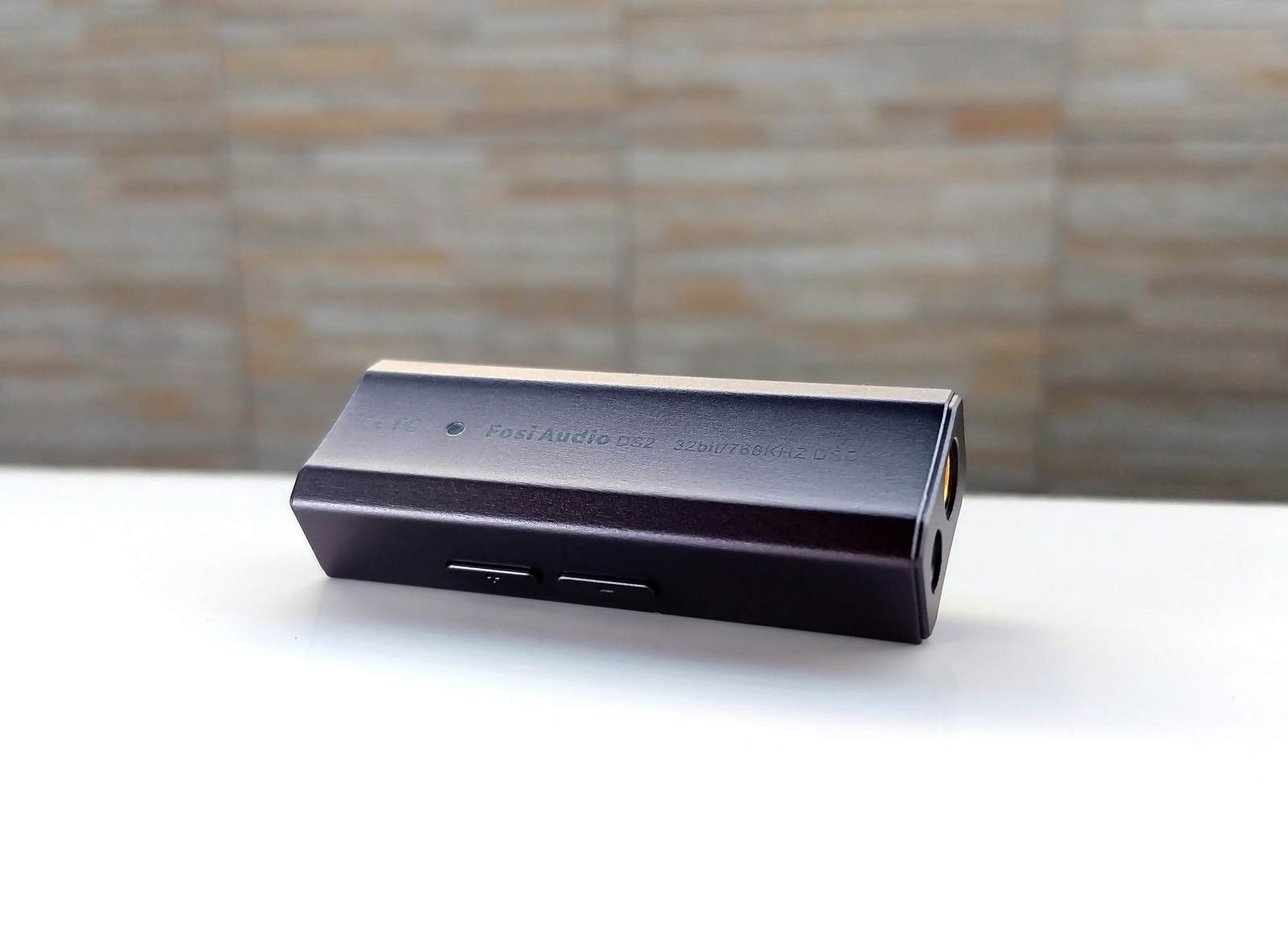
The DS2 brings the same concept of “light and shadow” that I could observe in the Astell&Kern PEE51 dongle, that is, depending on the angle at which the light is reaching on the object, one part may become brighter and the other darker. The dongle is very well finished, it has no sharp edges, the surface is well polished and pleasant to handle. It only has two volume buttons on the side of the product, which by the way they don’t make noise if we shake the dongle.
The highlight is the lightness of this dongle, it really is very light, it seems that there is nothing inside. The iFi GO link that I recently tested weighs only 11g and I already found it extremely light, the DS2 weighs only 15g, that is, a product with an extra 4.4mm output manages to have almost the same weight as one with only a 3.5mm output. Now, at GO link they must be considering the product as a whole (because it is a dongle with a fixed cable), here at DS2 the weight must be only the equipment without the cable. Even so, it’s still pretty light (in my opinion).
The DS2 is capable of playing PCM files up to 32bit/768kHz and DSD64/128/256/512. I don’t particularly use files with these higher sample rates, but I agree that the more different files the equipment can read, the better it will be, as I know it will benefit those who use them. This dongle doesn’t support MQA files.
RGB LED. The DS2 has basically only 4 LED colors, and the config is like this: When the product is in Low Level and playing PCM, the LED is red, when it’s playing DSD, the LED color is blue. When the dongle is in High Level mode, playing PCM the LED is yellow, and when it’s playing DSD, the LED is purple. As I only use FLAC 16bit/44.1kHz PCM files and conventional streaming services (Spotify, Deezer, Youtube), I was only able to see the red and yellow colors.
Low Level and High Level Mode. Here we can already imagine that it is a resource similar to a gain, only with a slightly different nomenclature (I will detail the sound changes in the “sound aspects” section). The command is very simple, to switch from one mode to the other, just press the two volume buttons at the same time, you don’t even need to hold it, just press the two together and that’s it. I found the solution very smart, it avoids adding another button to the product.
Battery consumption on 3.5mm output. Using the AUNE Jasper, the battery consumption was 12% The smartphone I used has a 3.000mAh battery. The test was performed during 1 hour of playback with the screen off and WiFi off (airplane mode). The volume was set to level 12 out of the 15 available via Android. The dongle was in “Low Level” mode (no gain enabled).
Battery consumption at 4.4mm. Using the Tin HiiFi P1, the battery consumption was 16%. The test was carried out along the same ways as the previous one, the only difference being the volume at level 13 out of the 15 available on Android, and the dongle was placed in “High Level” mode (with gain activated). Remember that this is a simple test just to get a base, they are not extremely accurate numbers.
Heating test. During the time that I am evaluating the battery consumption, I’m also evaluating the surface of the product to feel if it is heating up disproportionately. Like every device like this, the minimum will always be a little of heating, this is normal, at the 3.5mm output I found the DS2 slightly warm, something very discreet, it goes unnoticed. At the 4.4mm output I found the DS2 a little warmer, but I consider the temperature still within normal limits, it did’nt show any signs of excessive heating. At the time of testing the 3.5mm output the dongle was in Low Level, and in the 4.4mm output the dongle was in High Level mode.
Accessories. The DS2 comes with a USB-C to USB-C cable and a USB-C to USB-A adapter. I thought the cable kit was good but incomplete, the ideal would be to have a Lightning cable (iPhone) also included in the package. Even better if instead of a USB-A adapter there was a cable to connect to the computer. I understand that to make the product cheaper, cuts were made, but I think it’s essential that companies put the cables of the respective connections in the product.
The product was immediately recognized on my notebook (Windows10), I didn’t need to install any drivers (plug&play). According to the company, Windows 8 and 10 don’t need driver installation. Macbook doesn’t need driver installation. Something I didn’t find interesting is that the company doesn’t provide a download page for those who need the driver or even firmware upddates for the future, you have to contact the after-sales service and ask for the same (not the most convenient method).
The DS2 doesn’t support earphones with in-line remote control or call answering with earphones. The volume steps of the product when connected to the computer are 2 in 2, that is, 2, 4, 6, 8, 10, etc. On Android, I was left with only the 15 levels available for my version of the operating system.

SOUND ASPECTS:
It must be remembered that this analysis is subjective, based on my experience with the product and also on the synergy with the other equipment I used here. I also already inform you that the more objectivist part of the hobby is not really my beach, so it may be that some information can be limited, I don’t have much knowledge about the technical side of this type of product.
The audio quality of the Fosi Audio DS2 it’s very good. According to the company, the DAC chip used in the dongle is from the company ESS, model ES9018K2M. The equipment has the necessary implementation to run the balanced system in the 4.4mm output. The sound transmitted by DS2 showed a good performance in transparency, definition and clarity. I didn’t notice any distortion, coloration or strange sound during the periods that I was listening to my songs. The DS2 had a little noise floor on the 3.5mm output, but it’s something very discreet, it doesn’t interfere with anything, basically it’s only possible to hear it when there’s no sound being reproduced. On the balanced 4.4mm output I didn’t see this detail.
Low Level and High Level Mode. As already mentioned in the “physical aspects” section, the DS2 has a feature that would be something like a gain. So, in practice, I did the tests changing between one mode and another but I didn’t notice any significant change in the sound. I tested the feature on both the 3.5mm and 4.4mm outputs, but I wasn’t able to hear any difference in the sound. Different from a Questyle M15 gain resource, which I press the button and soon I feel the sound get “stronger”.
Analyzing the amplification part of the DS2. With the Aune Jasper on the 3.5mm I thought the sound was very good, the Jasper is an IEM that is easy to push but it also manages to scale when you plug it into a source with more milliwatts. So, in my opinion the DS2 is indeed a dongle that can take most of the IEMs available on the market, that’s because with Jasper the DS2 managed to scale a little. Now, for the record that the best sound I got with this IEM was when I tested it on the DAC/AMP AUNE Flamingo, that was the best result in terms of scale I had with Jasper to date. With the DS2 I set volume of the IEM around 40% using it in Windows.
As for the balanced 4.4mm output, the DS2, in my opinion, manages to push the Tin P1. I felt the bass play in a good way, with clarity and strength, the sound of the IEM was satisfactory for me. It’s already known that the P1 has a greater need for amplification to play well, in my case here, I have seen that most of these dongles with balanced output that I tested managed to make the IEM deliver a satisfactory result, I think that only with the DD HiFi TC44C that had a feeling that it could be more powerful (to run the P1).
Brief comparison with the Questyle M15, just to have a source reference, they are different products, although in practice they have the same objective. Both at 70% volume on Windows. In terms of sound, I think the M15 is more “neutral” and the DS2 more “energetic”, I can hear the treble and the bass of the DS2 with a tiny amount more. In terms of amplification, the DS2 is slightly more powerful than the M15 at the 4.4mm output (without the M15 having the gain turned on), but it’s something really microscopic, at the end of the day the difference is irrelevant (at least for me). The big plus here is that the M15 has the feature to activate gain, and then the M15 passes the DS2 in this amplification criterion… as was said before, in the DS2 this gain feature was not very effective (to my ears).
Currently in terms of affordable dongles and with this configuration (3.5mm & 4.4mm), the Fosi DS2 and the Truthear SHIO come in as the best cost-benefit options, so far I don’t remember seeing others in this price range and with the same quality that DS2 and SHIO deliver. For my taste, I think the DS2 is even prettier than the SHIO (and cheaper too). Fosi also has the DS1 that has the same output configuration, but I saw that it was a value slightly above the value of the DS2, so the DS2 continues to have an advantage.
I think the 3.5mm & 4.4mm output dongles are the best options for anyone looking for portability and convenience in this hobby. Of course, if the person is into the hobby, if not, a dongle with a 3.5mm output is a good alternative too, in this case, I understand that it would be more for the person to supply the lack of P2 output of these new smartphones, so that’s fine.

Thank you so much for being here!
Consider follow us on Facebook and Instagram to get all the news!

 )
)

 IEMs and Music