>>I am brazilian and I speak portuguese, so forgive my english, I’ll use translation tools to help<<
INTRO:
Twice, after the Ceramics, now it’s time to the Rose Technics Earfree International 3 (or i3). Unlike the Ceramics, the i3 is the company’s flagship model, which features Active Noise Cancellation (ANC).
Price: $49.99 USD
Colors: Gaius Beige, White Pink, Samuray Gray
ROSE TECHNICS LINKS:
https://s.click.aliexpress.com/e/_DFSRdFL
https://s.click.aliexpress.com/e/_DeTycPN
SPECIFICATIONS:
– (1) 10mm Dynamic Driver (DD) DLC per side
– Frequency range: 14Hz – 23.6kHz
– Impedance: 32Ω
– THD: ≤0.02%@1kHz
– Rated power: 15mW
– Touch Controls
– Bluetooth 5.3
– Codecs: AAC, SBC, mSBC, LDAC
– Signal range: 10 meters
– ANC and Ambient sound
– Low Latency: 54ms
– ROSELINK App – customization and EQ
– Battery life: 10h (total 50h)
– Compatible OS: Android, iOS, Windows
– Dual-device connectivity
– Waterproof level (Earbuds): IP54
– 4 Goer Mics for calls
– Earphones battery: 40mAh
– Case battery: 500mAh
– Charging via cable (USB-C)
– Charging time: about 1h
– Fast charging: 80% in 30min
– USB-C power supply: input 5V 1A
– Case size: 4cm [H] × 6cm [W] × 2cm [D]
– Weight: 3.6g (one side)(without tips)
– Case weight: 40.6g (without earphones)
– Total weight (box, earphones, etc): 173.3g
– Packaging size: 10.2cm [H] x 10.2cm [W] x 3.7cm [D]
UNBOXING:
PHYSICAL ASPECTS:
Before evaluating the i3, I evaluated the Ceramics, which is a TWS from the same company, so it’s inevitable that some things sound similar between the TWS, and I’m also going to take advantage of the base of the previous review for this one.
Eartips: Only 1 type of silicone eartips came, in sizes S/M/L. Here we can already notice the first difference in relation to the Ceramics, which came with one more size in the kit. Well, it’s natural that the flagship product would have more eartips, but that wasn’t the case. They are very good eartips, I believe it’s possible to find the sound of the earphone with them. I don’t see the need to acquire eartips from third-party companies (this is subjective). Another difference of the eartips is that the ones from the i3 are “normal” (normal bore), while the ones from the Ceramics are wide bore. It would be good if the company had put this wide bore kit on the i3 too (in addition to the stocks). I used the stock eartips in size L to do this review.
A suggestion of third-party eartips – if necessary – are the SpinFit CP360. I tested them on the i3 and they worked well, they even fit comfortably in the TWS’s charging case (I tested the size M ones).
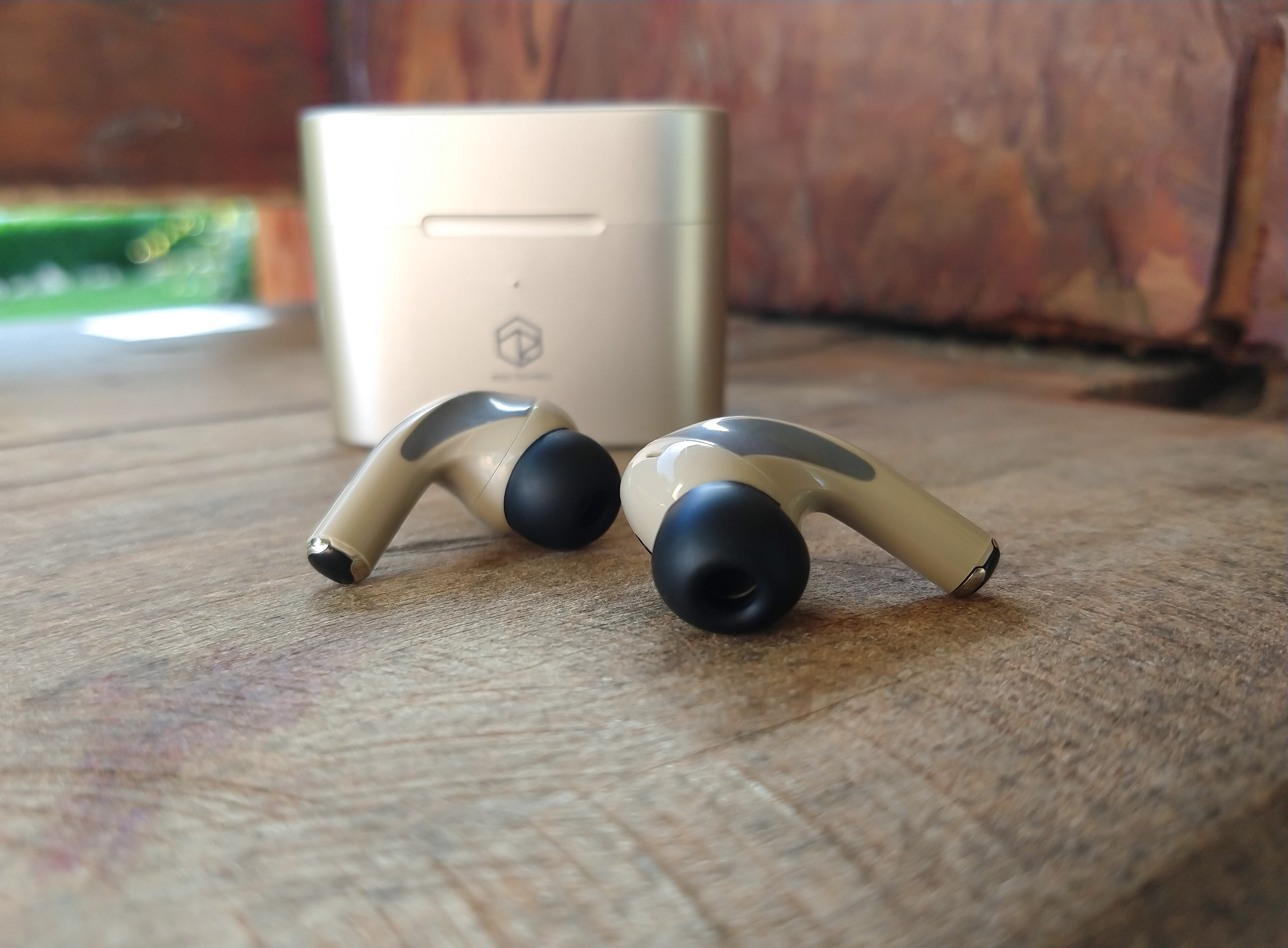
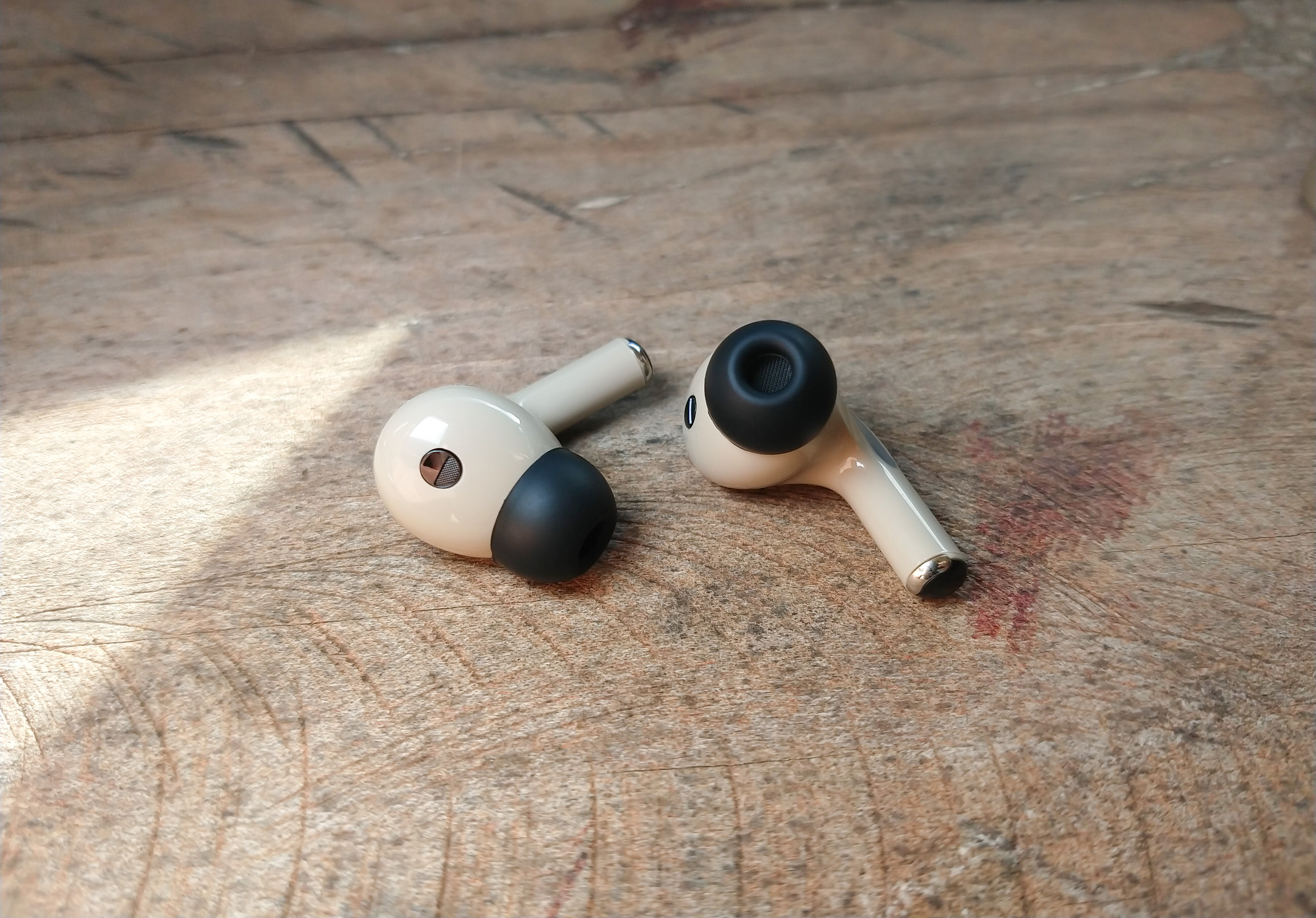
Construction: Here I think there was a tie with the Ceramics, because both have a negative and a positive point in this regard. For example, the construction quality of the i3’s charging case is superior to the Ceramics, but when we go to the earphones, I think the Ceramics have a slightly better construction. But, in relation to the i3, the charging case is great, I liked it a lot, it’s all covered in plastic (looks like metal). The earphones themselves have a different design, and have that reflective plastic (which I criticized about having on the Ceramics case). It’s kind of out of fashion, it gives the impression of being a cheaper product. For me, the ideal would be if the earphones were matte.
That detail in the Ceramics that I reported about the lid closing, here in the i3 they fixed it, it doesn’t happen that the lid keeps coming back, it stays still when opened (positive point for the i3 case). Another detail is that “clack!” sound every time you close the lid, here in the i3 this still happens, but it’s a little softer. Also that just like in the Ceramics, the i3 case has the USB-C input at the bottom, and we’ve seen that this detail was solved by the TWS companies, putting the input to the back of the case. Another positive point of the i3 case is that it can stand vertically (upright), I think it’s ideal to rest the product on a table. The i3 case also has the same reset button as the Ceramics case, just hold for 10 seconds to reset the earphones. I really liked the i3 case, it’s very compact and light, good to take on any occasion.
Bluetooth signal connectivity: The pairing is very fast, less than 1 second (after the first pairing is done). The signal range is good, it reaches the 10 meters indicated by the specifications. The signal stability was good, even using the earphones between the rooms of the house, that is, with walls between the smartphone and the i3.
Touch control: Here I open a paragraph to talk about the Touch area on the i3. If you noticed a gray part in front of the earphones, that’s where you should perform the commands, and I must say that it wasn’t a very nice area to put the Touch. It’s kind of hard to position your finger in that region, it would be better if it was on the side, either on the stems or a little above. The commands are responsive, but as the Touch location is a complicated area, you may need to perform the commands more than once.
Just like in the Ceramics, the i3 also produces a sound every time you perform a command on the Touch, it’s like a “pop” sound. I think the company could remove this sound, there’s no need.
Latency test: I did the latency test watching videos on YouTube and I can guarantee that the sync was perfect, both in normal mode and in game mode. I didn’t notice any delay.
Multipoint connection: This feature allows you to connect more than one device at the same time. I did the test here and it really worked, I was able to connect two smartphones or the notebook and smartphone. I tried to make 3 connections but I couldn’t, it always stayed at 2 devices max. The i3 stays paired with 2 devices all the time, you don’t even need to switch manually, but let it be clear that it doesn’t play music from both devices at the same time, one needs to pause the execution to then start playing on the other. With the LDAC Codec activated, the multipoint doesn’t work, that is, only 1 device can be paired.
ROSELINK App: Following, the screenshots of the application that I found interesting. I think the images are self-explanatory and so I don’t need to extend myself.
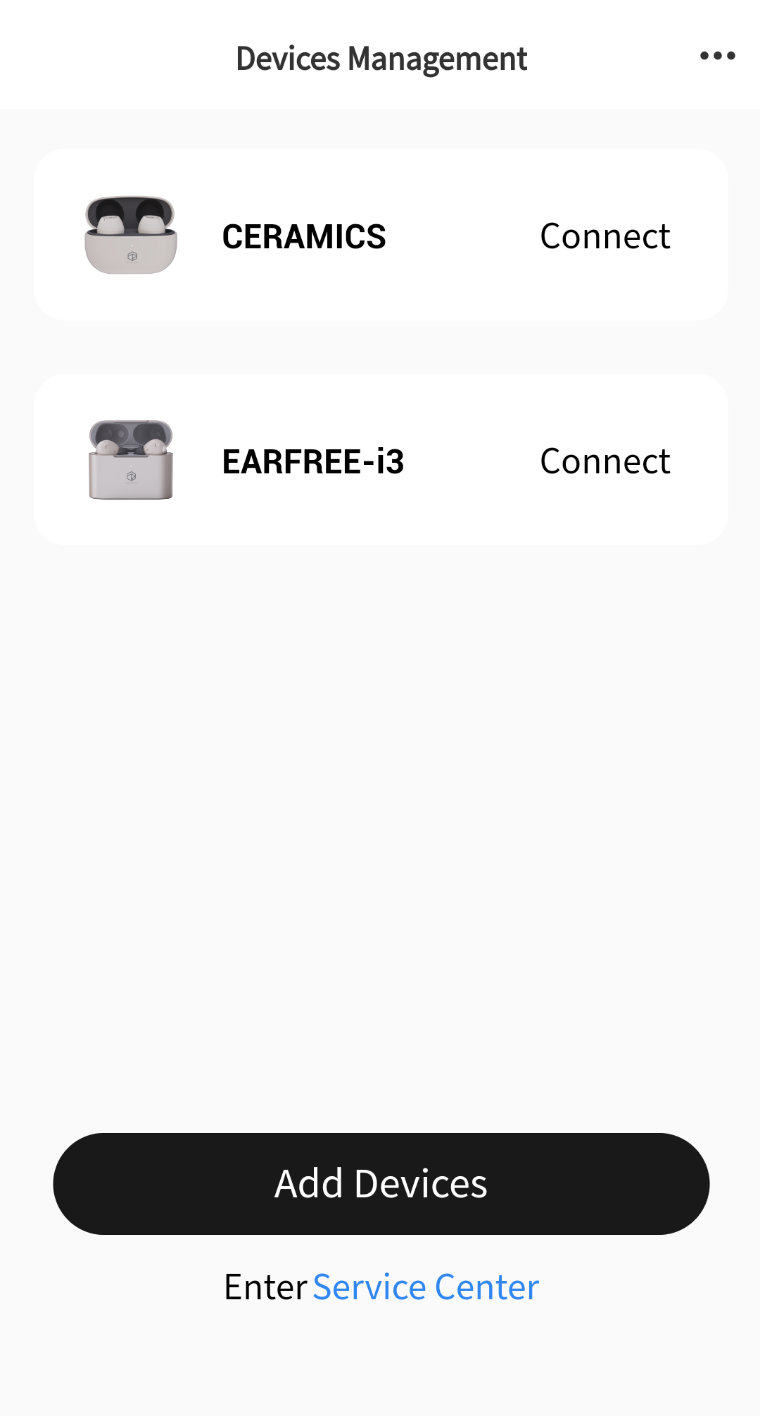

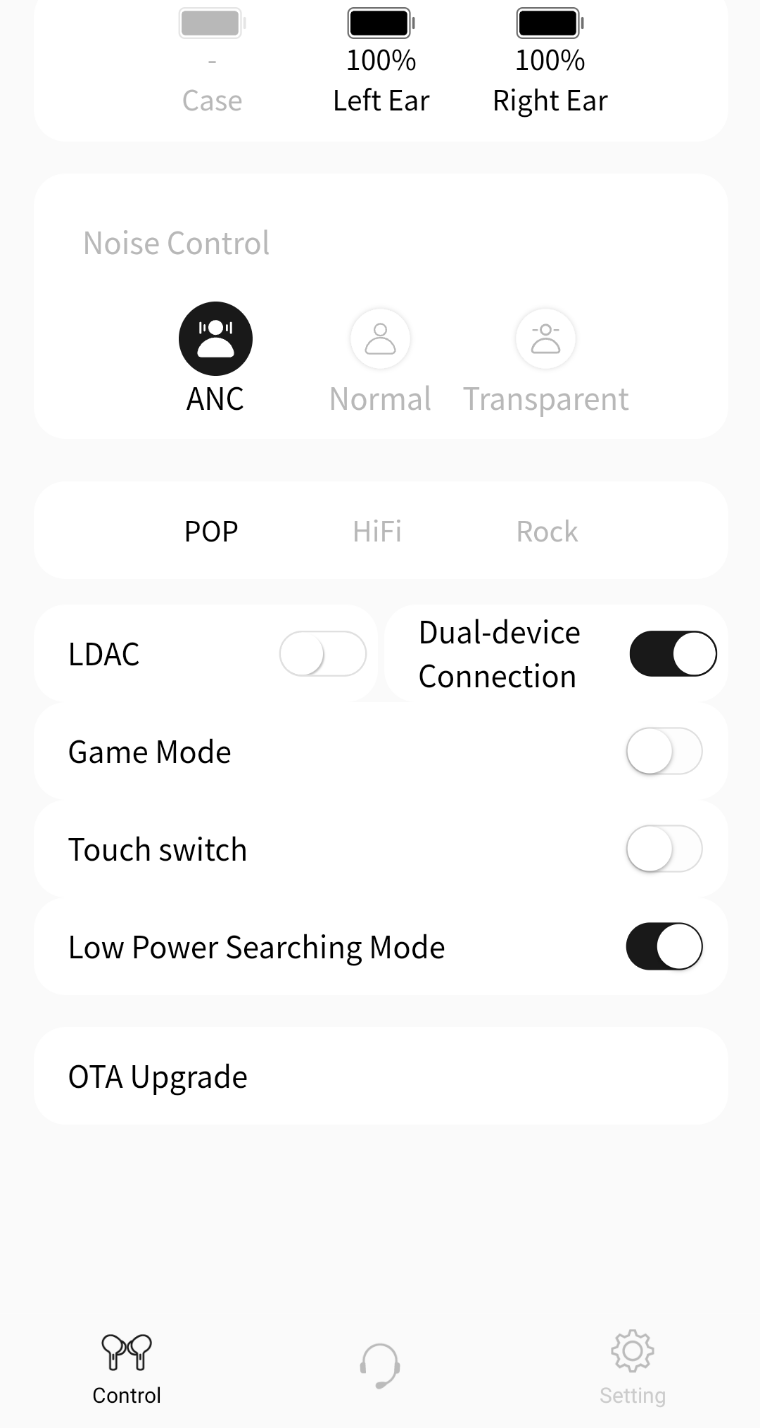
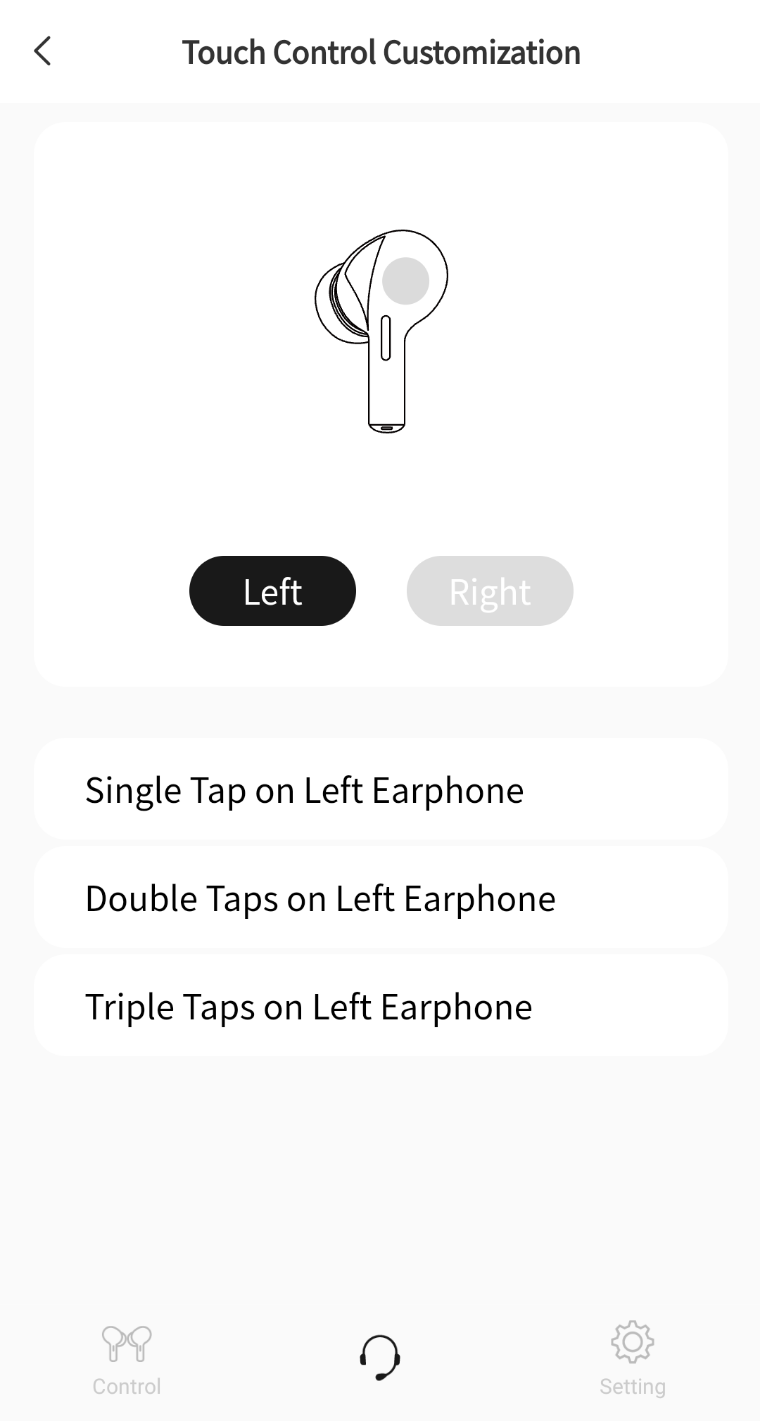
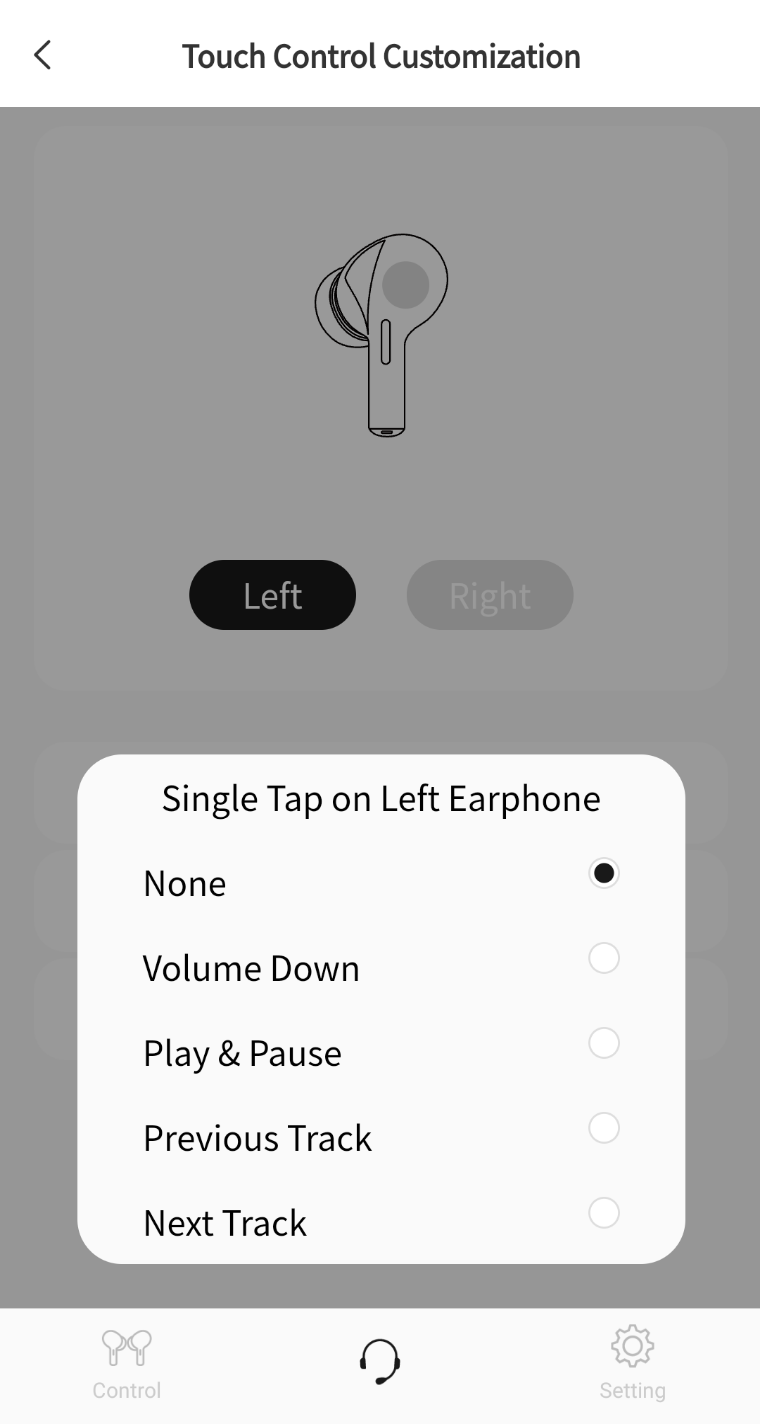

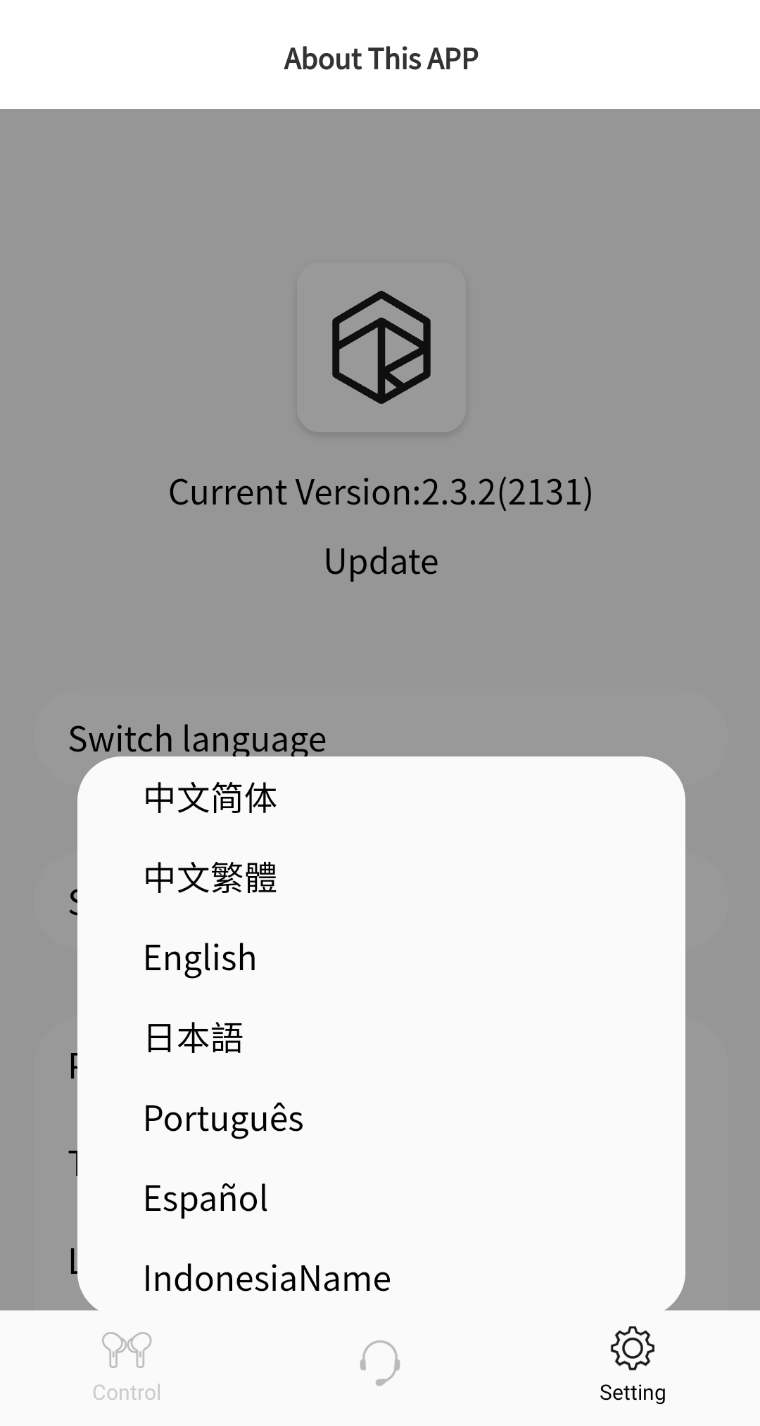



One point I didn’t find cool in the App was always needing to turn on the smartphone’s GPS, and if you don’t give permission to access your location, you won’t be able to enter the App. Another thing that may be different for some users is, the voice that speaks in the earphones is in Chinese (I believe it is Chinese), while the Ceramics voice was in English.
ANC and Ambient Sound. I found the active noise cancellation good/ok. It works, but as I always say, this feature is just a softening of sounds, it won’t completely block the noises around. The Ambient Sound, or transparent mode, really always works more than the ANC, because it is the opposite, the microphones open and you can hear more sounds around. This technology in in-ear earphones still needs to evolve a lot, I think that in the future we will have more performance. To activate the ANC directly from the earphones you need to hold the Touch on the right side for 3 seconds.
Microphone: The quality of the microphone in a quiet environment was very good, I could clearly hear my voice, the audio was noiseless. But with a fan facing my face, the situation reversed, it became impossible to hear my voice and the audio became pure wind noise.
Fit and comfort: The first time I put the earphone in my ear I found the fit strange, I noticed that there was something different there. Over time I tried to position the earphone in a way that could better fit my ears. It improved, but I didn’t have that feeling of perfect fit, it seems that there is something that could be different. For example, the Tanchjim Mino has almost the same shape and I had an excellent fit with the earphone.
I found the isolation of the i3 ok, and the insertion I found something between shallow and medium. This is a very important thing, because I think the earphone could have a little more insertion, the Ceramics for example, was perfect. This is a very subjective thing, it may be that for another person the insertion is great. The comfort is excellent, the earphones weighs nothing, just 3.6g, one of the lightest TWSs I evaluated. Very good earphone for long music sessions.
Accessories: the i3 comes with a protective case that I consider very good. I really liked the idea of this extra case, the case is very well stored. The case has a company logo in relief on the lid, it was the only difference I noticed for the case that came with the Ceramics. Otherwise, both are very good, positive point.
The company’s official website does not provide the user manual, but it comes with the product in printed form (in the i3 only in Chinese).
Page for downloading the App: https://rosetechnics.com/pages/downloads


SOUND ASPECTS:
The App has 3 equalization presets: POP, HiFi, and Rock. I did the evaluation in HiFi mode. Unfortunately, it’s not possible to review the 3 presets, but in summary, POP makes the sound bassier than HiFi, and ROCK has slightly more bass than POP (personally, POP was the one I liked the most). When you switch from one preset to another, the music doesn’t stop, but a voice in Chinese behind the music announces which mode is selected.
>>All sound described below will then be in HiFi mode<<
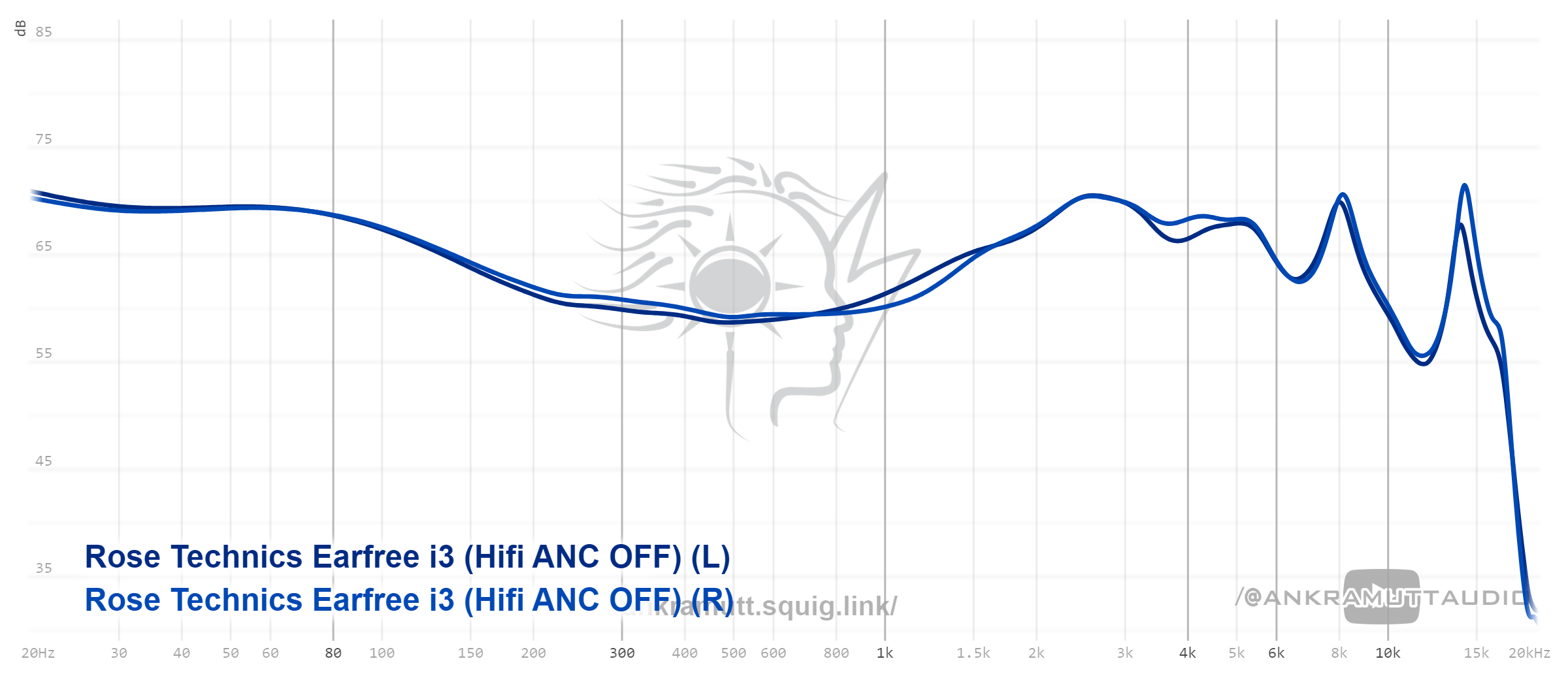
I understood the sound of the Rose Technics Earfree i3 as V-shape. Now, I think the sound is well balanced, the earphone has the three frequencies – bass, mids, and treble – in a linear way. All the points that the earphone had not so cool in the physical aspects are forgotten when we get to the part of the sound. Quite different from what I heard in Ceramics, the tuning of the i3 is very good, elevates the earphone to be the TWS flagship of the company.
Bass:
Quantitative: I think the bass of the i3 is between moderate and moderate to high. The bass has presence in the presentation. Very positive point because they aren’t excessive bass, everything in the correct way (for my ears). The i3 can be an earphone for people who like bass, I don’t necessarily think it’s a basshead earphone, but it certainly has bass that makes the presentation more fun. They are bass that combine with more popular genres, like Rock, Metal, Reggae, EDM and POP. The earphone has well-balanced sub-bass and mid-bass, I couldn’t perceive difference between the regions. The extension is good, I didn’t feel roll-off. The Galaxy Buds FE and the Anker P20i I think have more bass quantity than the i3.
Qualitative: One of the best bass I tested from these last TWSs I evaluated, it approaches the Tanchjim Mino, although the Mino has less mid-bass than the i3. The bass of the i3 are balanced, controlled, have good definition, have weight, have strength, have texture, and don’t invade the mids. It’s okay, it doesn’t reach the definition of a wired earphone, but for a TWS I think it’s good. The impact is strong and has expansiveness, the beat on a bass drum you will hear in a very linear way, neither too dry nor too massive, on point. Any type of music or instrument that you listen to will sound good with these i3 bass, it goes well from electric basses to acoustic guitar. From electronic to MPB, although for Jazz I prefer another bass profile (less subs).
Mids:
Quantitative and qualitative: The mids of the i3 are another very positive point of the earphone, because they are neither recessed, nor too forward. There is an emphasis in the upper-mids region that brings more highlight to the sounds, but at no time do they sound aggressive or harsh. They are mids of good clarity, good transparency and good definition, you can feel a lot of information from the instruments or voices that transit in this region. Some songs you can hear the nuances of the vocals, that sensation of air being captured by the microphones. It’s kind of rare to see TWSs with this region like this, because the approach of most earphones is to never bother the users, so they recess the mids.
Voices: The voices in the i3 are good for both types of voices, this earphone has a highlight in the pinna gain and is also good in the bass, so it can extract the potential of both types of voices, female/high or male/low. I would say that the i3 achieves good performance with the entire vocal scale, from low voices to soprano. Very versatile earphone in this voice part.
Treble:
Quantitative: Just like in Ceramics, the i3 has treble that draw attention, and as I said in the past review, it’s not because of excess treble, but because most of the TWS earphones I tested had more recessed treble. The i3 escapes this premise and presents good presence in the treble, I think they are at the moderate level. Just like the other frequencies, the treble of the i3 show a certain linearity in the sound. Musically speaking, I just thought it’s not good for Jazz and classical music, but certainly this has a lot to do with my preferences, I like to listen to Jazz with a more analytical/bright approach, and classical music I think it’s always better to have more instrumental separation… but other than that, the i3 played well with a very good amount of genres. I didn’t feel roll-off, the extension is good.
Qualitative: The treble of the i3 are versatile, they adapt to varied musical styles, they aren’t colored, they aren’t tiring, I think the treble of the Ceramics appear even more than those of the i3, since the Ceramics has less bass than the i3. The treble are balanced, linear, have good definition, good detailing, good airy. The sparkle is very coherent with the real, it gives the impression that the sound is “correct”, “natural”. I didn’t perceive at any moment the presence of harshness, stridency or sibilance. I think the treble of the i3 are well resolved for this type of equipment. Without a doubt one of the best treble I’ve ever heard in a TWS. Cymbals, hi-hats, triangles, everything sounds very natural, without sounding aggressive.
Soundstage: I found the soundstage of the i3 very good. The i3 and the Buds FE are two good earphones in this issue of spatiality in sound, the Buds FE is even a little more, since it has more recessed mids and treble than the i3. The i3 does well in depth, height and width.
Imaging: I found the instrumental separation good/average. Because the earphone has a highlight in the three regions – bass, mids, and treble – it makes all the instruments have good clarity and definition. The stereo image is very good. The spaces between the instruments are ok.
Driver Flex Test: The i3 showed a little bit of driver flex noise, but it was only when I pressed the earphones against my ear canal. When in the natural moment of insertion, I didn’t hear driver flex.
Amplification (or volume in the case of TWSs): This part is to say how “loud” I thought the earphone can get. In my opinion, I think the i3 has a good volume, it has a little more “volume” than the other TWSs I evaluated. I have the habit of listening to at low volume and I put it at 12-13 levels of the 15 available by Android. At max volume it was louder than usual.

Music is subjective, so below is the list of some musical genres that I personally think that was better with this IEM. Remember that were only few genres and few artists tested. If I describe that one genre was better and the other don’t, it doesn’t mean that you can’t listen to your favorite music genre with this IEM and love it. So, here goes:
Better:
Hip Hop
Reggae
EDM
MPB*
POP
Rock
Blues
Metal
Samba*
Bossa Nova*
*Brazilian musical genres.
Not so much:
Classical
Jazz
Link da Playlist:
Graphs by ANKRAMUTT:

Thank you so much for being here!
Follow us on Instagram to get all the news!
We also have a group on Telegram, let’s talk.

 )
)

 IEMs and Music