>>I am brazilian and I speak portuguese, so forgive my english, I’ll use translation tools to help<<
INTRO:
Today we have an IEM that I was really looking forward to reviewing, the Simgot SuperMix 4. For those who don’t know, Simgot is the owner of the best IEM in the $100 USD range – in my opinion – which is the Simgot EM6L. So, it’s possible that the SuperMix 4 will be the winner in the $150 USD range. Let’s analyze.
The Simgot SuperMix 4 was sent by LINSOUL, one of the main distributors of Simgot products, as well as several other brands and audio products. More information on the links below.
PS: For those who don’t know, LINSOUL is the same DD-Audio Store on AliExpress.
Price: $149.99 USD
Color: Black
Cable: Without Mic
Simgot reviews: EM6L, EW200, EA500LM
LINSOUL LINKS:
https://s.click.aliexpress.com/e/_DddeX8B
SPECIFICATIONS:
Hybrid: 4 Drivers per side
- (1) 10mm Dynamic Driver (DD)
- (1) Balanced Armature (BA)
- (1) Planar Magnetic
- (1) Piezoelectric (PZT)
– Frequency: 8Hz – 40kHz
– Effective frequency: 20Hz – 20kHz
– Impedance: 7.2Ω ±15% (@1KHz)
– Sensitivity: 120dB/Vrms (@1KHz)
– Termination Plug: 3.5mm (straight design)
– Connectors: 2pin 0.78mm
– Cable size: 1.2m (detachable)
– Cable: OFC copper silver-plated
– Shell: 3D Resin
– IEM weight: 5.4g (one side)(without eartips)
– Cable weight: 26.5g
– Total weight (packaging, iems, etc): 214.2g
– Packaging size: 14cm [H] x 12cm [W] x 6cm [D]
UNBOXING:
PHYSICAL ASPECTS:
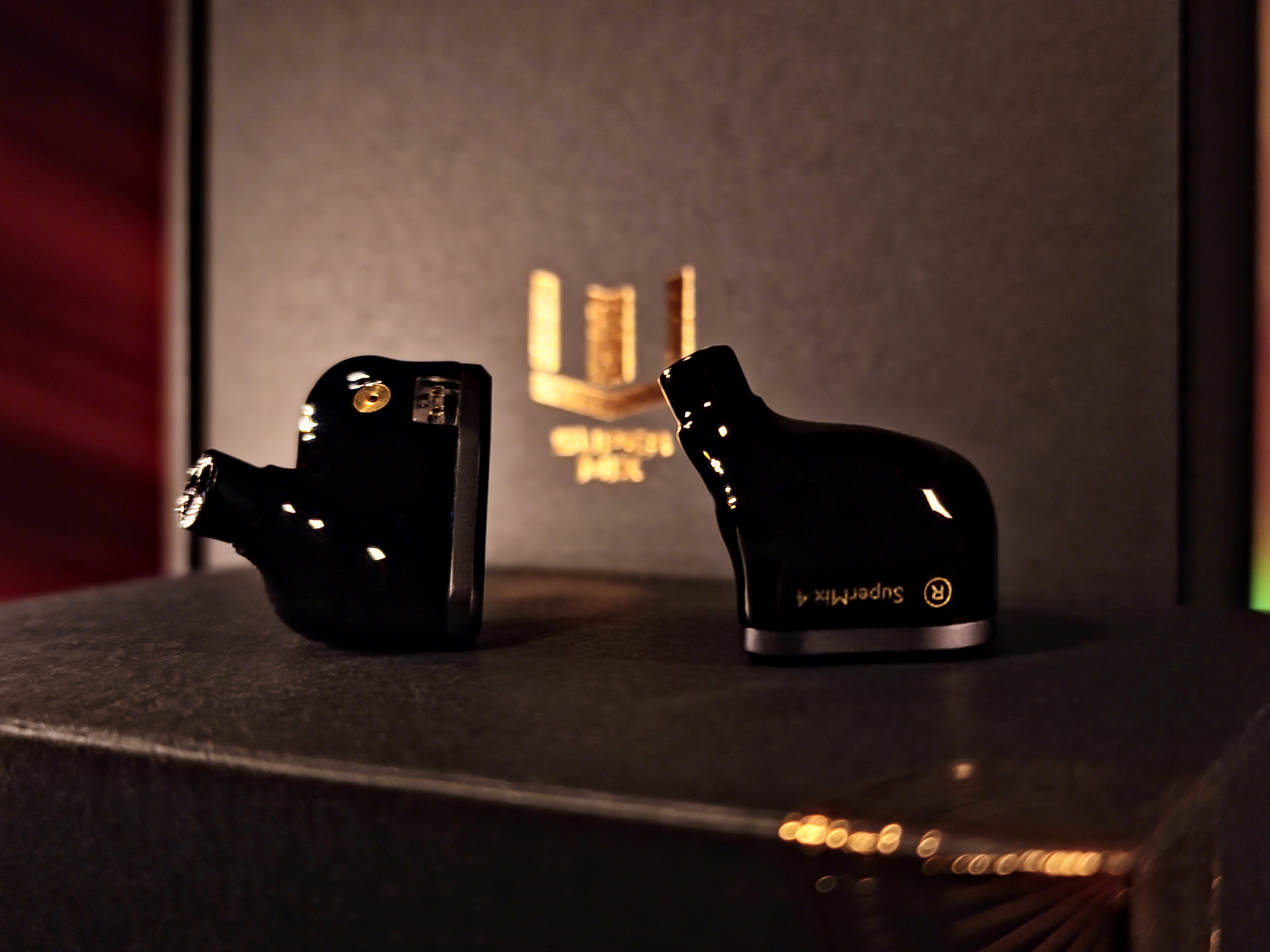
Construction: When I unboxed them, I noticed that the IEM were of exceptional quality, especially the shell. The shell has two parts: one made of resin and the other made of metal (the faceplate). The resin part is excellent, very well built, and the faceplate is also of great quality. If the IEM cost more than $150, they would be worth it. The SuperMix 4 shell is already an improvement compared to the EM6L shell. Another improvement I noticed in the IEM is that they now come with 2-pin connectors, while the EM6L has a QDC connector… which is also very good, but sometimes it can be difficult to find a replacement cable.
The SuperMix 4 adopts a minimalist design that I really like, with more sober colors and no weird shapes, which is what I expect in an IEM. The earphones remind me a lot of the style of the Kiwi Ears Quintet, which also has a simpler profile. They are currently my favorite earphones, precisely for this reason, they join the sound part with the more minimalist design part. We will compare both later.
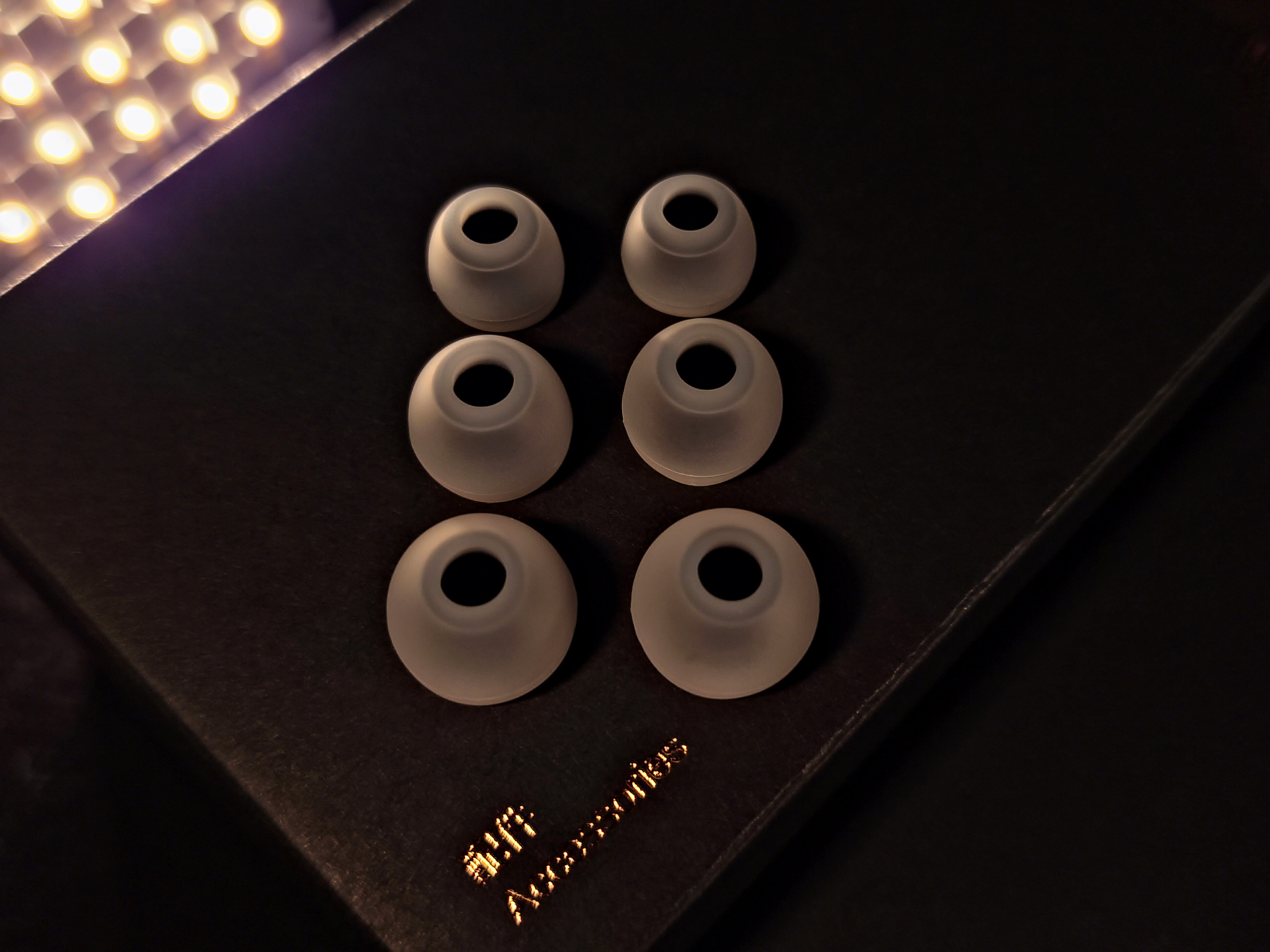
Eartips: Here, something that is repeated in almost all of the brand’s IEMs… Except for the EW200, the other two that I evaluated – EM6L and EA500LM – came with the SuperMix 4 eartips, the white ones with the black tube. Well, they are good eartips, the dome part is very soft, the problem is that I find their tube a little rigid, so, whenever possible, I replace them with more flexible ones. In this case, that’s what happened, I used the SpinFit CP100 size M to review the earphones. For a $150 IEM, coming with only one set of eartips in sizes S/M/L is not ideal, I think. It should have at least 2 types of eartips. I’m here with the DUNU Titan S2 – next review – and it’s simply amazing how many (and high-quality) the eartips are… and by the way, they cost about half the price of the SuperMix 4… Of course they are different products. So, “hey Simgot, let’s pay more attention to the eartip kit”.
Cable: The cable is excellent! However, we’ll see at the end of the paragraph that there was a small setback. It’s a very good cable. I thought it was very elegant aesthetically, but I’m biased because I like cables with that silver color. It’s light, sturdy, easy to roll up for storage, doesn’t get tangled, doesn’t take up memory (waves), and doesn’t produce microphonics. The earhooks are very good, have a great curvature and are smooth. It has a 2-pin connector, which is my preference. I admit that it could be thinner, like the EM6L cable itself, although this detail doesn’t have that much of an impact on usability. The chin slider doesn’t work very well, it slips.
So, unfortunately I was lucky enough to get a cable with “bad contact”, the right side is causing small interruptions in the signal if I move the position. I tested it with another cable and the problem didn’t appear, so it really is a defect in the stock cable. It may have been something that only my unit had, but… it did, so I have to report it. It’s an issue that I certainly didn’t like, but it’s not that bad, just contact the store and they’ll try to solve the problem (if you need).
Fit and comfort: Both fit and comfort are excellent. I really value this feature in an IEM, because as I always say, if you have an IEM with excellent sound but the comfort/fit is not good, it won’t be of any use, you won’t want to use the IEM for a long time, and the time will come to stop using it. Here with the SuperMix 4, I only have praise to give, the stability of the fit was 100%, I didn’t have any pressure points, very good IEM for listening to music for long time. The insertion is average (it will also depend a little on the eartip), and I found the isolation to be very good.
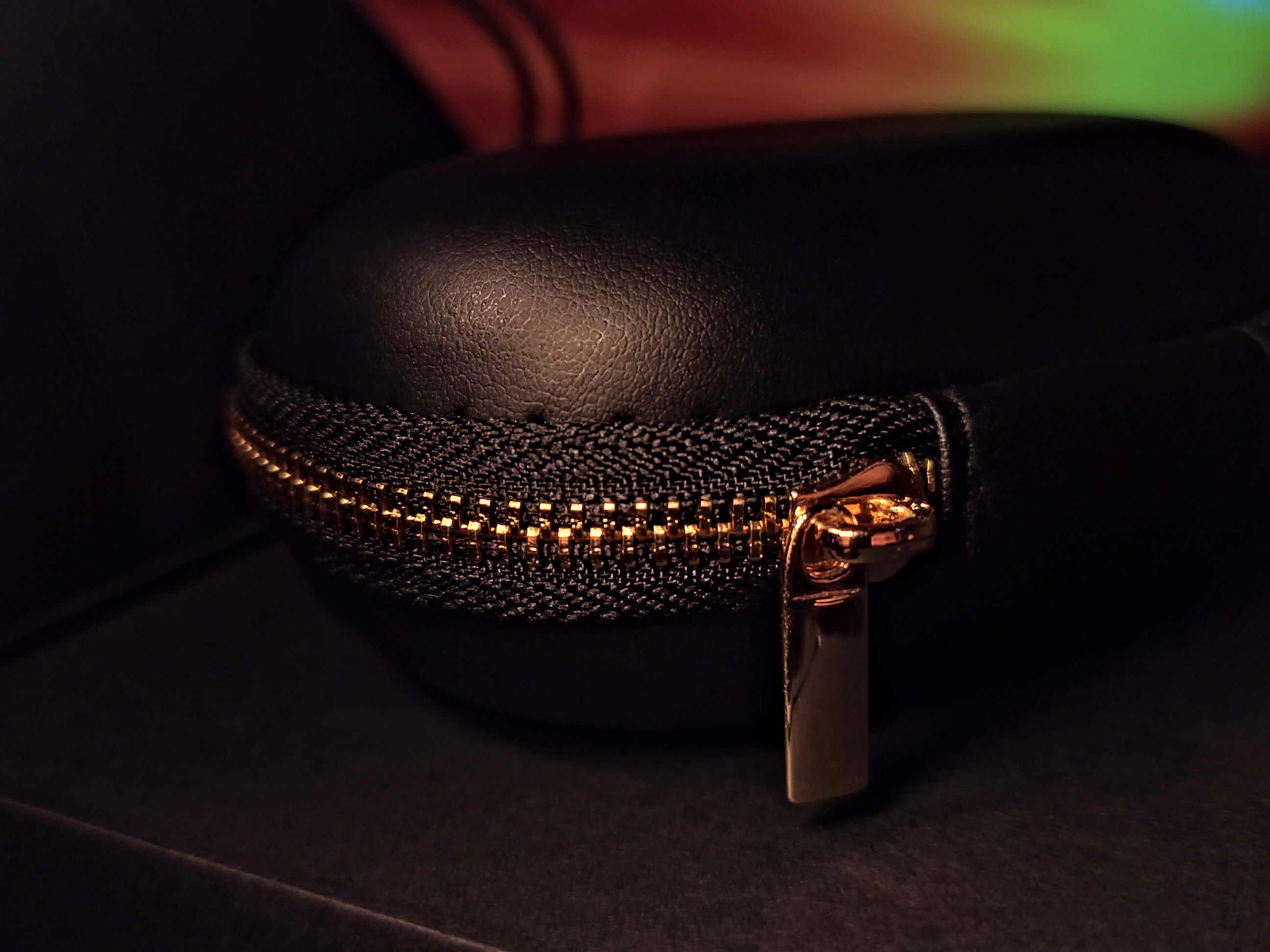
Accessories: It came with the traditional case that Simgot puts on its products, which is a great case, with internal space to store the IEM and another dongle, eartips, etc. The only difference is the color of the zipper, which in this edition came with a gold zipper.


SOUND ASPECTS:
I understood the sound of the Simgot SuperMix 4 as an IEM that follows the Harman Target (a sound compensation curve based on research by the Harman International group). Explaining the proposal of the curve, the bass is more accentuated, the mids are a little more recessed, the upper-mids are more emphasized, and the treble are more linear. This is the proposal of the SuperMix 4, because it follows the aforementioned curve well. It’s important to keep in mind that each company adapts this curve to its IEMs.
When I started listening to the SuperMix 4, I immediately got the feeling that the IEM are very similar to the EM6L. Unfortunately, I don’t have the EM6L on hands to do a side-by-side comparison, this is just a memory of what I heard. Now, if we look at the frequency responses of the IEMs, we will see that they are very similar (in tonality). I can’t say that the $150 USD one is better than its $100 USD brother because, as I said, I found them so similar that I would need to have the EM6L unit here to clear up any doubts. What I can say is that in terms of construction, the SuperMix 4 – in my opinion – is worth the price difference. The SuperMix 4’s shell is among the best I’ve ever tested. Of course, this is partly subjective, if you like the EM6L’s design more, then it’s fine too. It’s worth remembering that the SuperMix 4’s shell structure is much more elaborate, here we have a shell with exclusive ducts for sound passage, so it certainly costs more to develop.
In the $150 USD range, I confess I didn’t have many IEMs to test, but I believe that the main IEM to compete with the SuperMix 4 would be the Truthear Nova. But I don’t even need to go into much detail in this comparison, because the EM6L itself was already a superior IEM to the Nova (in my opinion). Tonally speaking, the EM6L delivers a better balance than the Nova, and for a cheaper price. So, obviously the SuperMix 4, because it looks like the EM6L, is also an IEM that I consider more elaborate than the Nova. The Truthear Nova is also a very good IEM, but it has a more prominent boost in the sub-bass and upper-mids, and the treble are a little more restrained, which to my ears, I preferred the greater “balance” between the frequencies presented by the EM6L and the SuperMix 4. The technical level in both is excellent, so it really comes down to a matter of taste.
Bass:
Quantitative: The bass is moderate. There’s a great balance between the sub-bass and mid-bass, I don’t feel that one region is louder than the other. The IEM have good activity in the sub-bass, the driver responds well to deeper sounds. I didn’t feel any roll-off, the extension is good. The SuperMix 4 is the kind of IEM that people who like a dose of bass will like, and even bassheads who want to start reducing the amount of bass will also like it (so they’ll stop being bassheads?). The amount here is great for playing any type of genre, from more electronic POP to more acoustic instrumentals.
Qualitative: The bass on the SuperMix 4 is clean, fast, controlled, versatile, and balanced. It has great definition and great articulation. It has good texture and physicality, but it’s somewhat moderate, there are other IEMs that are more textured and physical. The impact is also moderate, the bass drum of a drum is audible, but it never sounds too loud or excessive. The bass of the SuperMix 4 doesn’t invade the mids, nor is it muffled or booming. It’s a very versatile bass, able to adapt to many types of musical styles. From my memories, the bass of the SuperMix 4 seems to be even a little lower than the bass of the EM6L.
Midrange:
Quantitative and qualitative: Without a doubt, this is a very good point here in the SuperMix 4. We have very well-crafted midrange, neither too recessed nor too frontal. The pinna gain is excellent, with a slight emphasis that brings a lot of naturalness to the voices and instruments. The midrange in general has great transparency, clarity, and definition, as well as good detail. The Truthear Nova, for example, has a pinna gain with more elevation, which in some situations I thought made the mids more frontal than I would like… but here in the SuperMix 4, I don’t feel like I’m overdoing it with anything at all, everything sounds very comfortable to me without losing quality.
Voices: The IEM can perform well with both types of voices, that is, with female/high-pitched voices or male/low-pitched voices. Now, as I said, it will play everything very well, but if you want to get the most out of a certain type of voice, then you might need to look for a more specific IEM. For example: “oh, I want an IEM that puts Adele’s voice up there”, so that’s what I mean, you need to look for an IEM with more elevation in the upper-mids and treble. I think the Simgot EA500LM and the EW200 are IEMs that will be better for giving more emphasis to vocals with higher timbres.
Treble:
Quantitative: The SuperMix 4’s treble is moderate. It follows a linearity that comes from the upper-mids, you can’t even notice this transition from one region to another, which is why I call these IEMs “balanced”. I didn’t feel any roll-off, and the extension is good. Assuming that there are 3 types of treble in IEMs: dark, linear, and brighter… for me, the SuperMix 4 is linear, which presents treble correctly, neither too much nor too little. That said, it will be able to play the treble frequencies well in any type of music.
Qualitative: The treble is very defined, airy, and detailed. It’s not fatiguing, has no peaks, and isn’t colored. I never heard any sibilance. The sparkle is very consistent with reality. The treble isn’t shrill, harsh, or sharp. The instruments are presented very naturally without losing detail and sparkle. Hi-hats play with great definition, and you can hear the nuances produced by the instrument. Guitar solos have good energy without being shrill.
Soundstage: I found the soundstage to be good. It has good performance in all three dimensions: height, width, and depth. It’s certainly not the most spatial IEM I’ve ever heard. Let’s see in the comparison below that there are IEMs with a more open feeling. But for the price range, it’s great, very natural, nothing sounds narrow.
Imaging: I found the instrumental separation to be very good. The IEM deliver great definition of the instruments, nothing gets congested, and the vocals always have a step ahead in the presentation. Remember that this aspect is strongly influenced by the recording quality.
Driver flex test: I didn’t notice any driver flex sound when inserting the IEMs in my ears.
Amplification: I used the FiiO KA11 dongle connected to my computer to perform this review. The volume was 25% of the 100% available through Windows. I can say that the Simgot SuperMix 4 is an easy-to-play IEM that doesn’t require dedicated amplification. It will play well on smartphones, iPads, and computers. But as usual, I recommend that the person at least have a good quality dongle to play the IEMs. Currently, I recommend the FiiO KA11 as a good cost/benefit dongle.


COMPARATIVE: Simgot SuperMix 4 vs Kiwi Ears Quintet
In this duel, only one will come out on top… just kidding, both are excellent IEMs in different price ranges. But since this comparison was made, yes, I think there’s one that performs better than the other. It’s worth remembering that they are different products and that the Quintet costs $219 USD and the SuperMix 4 costs $149.99 USD.
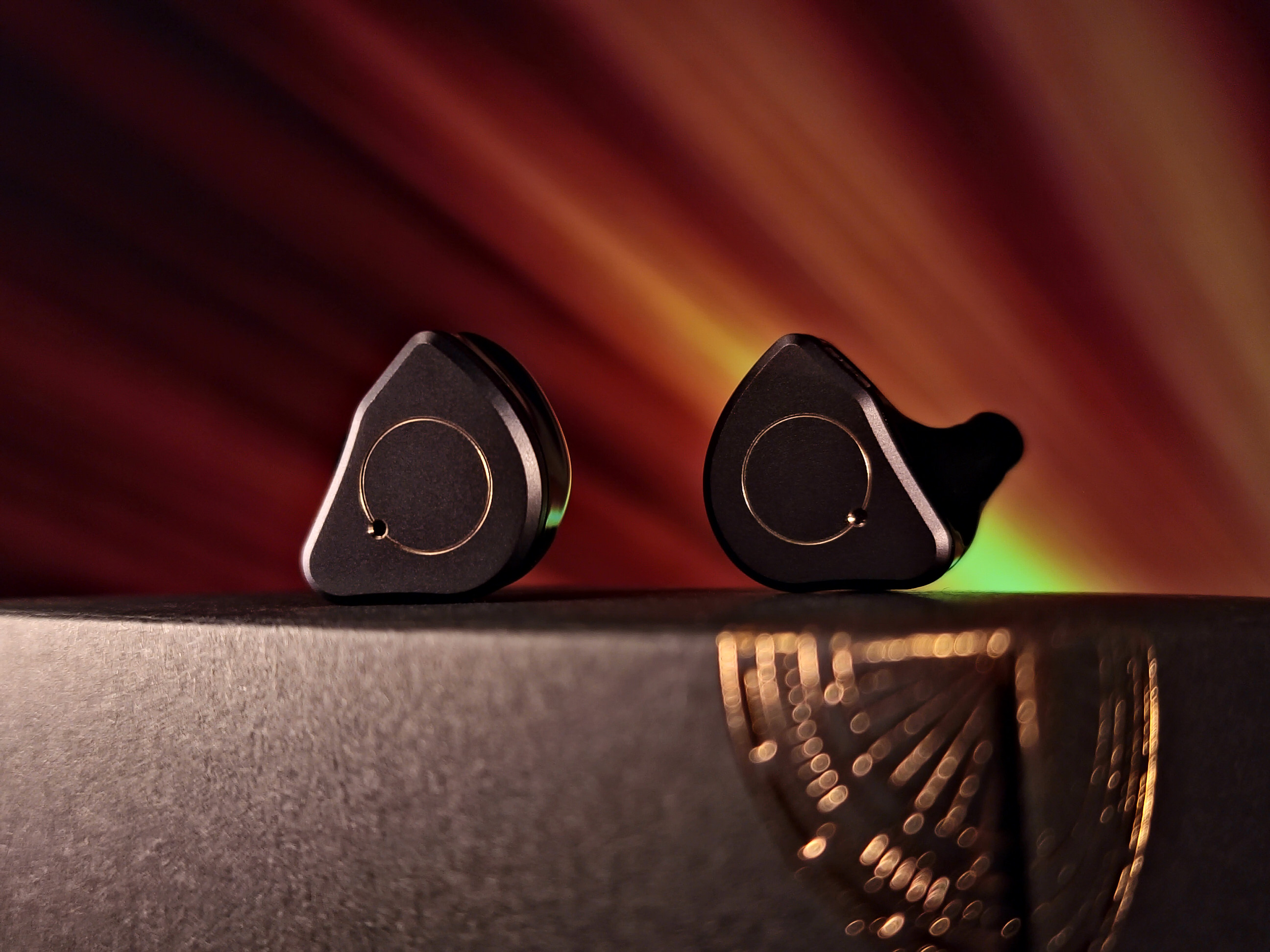
First, the physical part. The quality of the SuperMix 4’s shell is superior to that of the Quintet, although it’s not a huge difference. However, the Quintet is lighter and a little smaller in width (not much), which makes it more comfortable than the SuperMix 4. The Quintet’s cable is also lighter and thinner, which also helps with comfort. Aesthetically, I actually prefer the SuperMix 4 cable, but what matters is usability. The Quintet cable is more flexible than the SuperMix 4. In terms of eartips, the Quintet has more quantity, but the SuperMix 4’s are of better quality. In this sense, the SuperMix 4 comes out on top. The SuperMix 4’s case is better than the Quintet’s case, it has a better zipper and is larger… The Quintet’s case can only be seen as more compact, so it’s up to each user. I think that in terms of physical aspects, the Quintet comes out on top because it wins in terms of comfort (to my ears), while the SuperMix 4 is better in terms of accessories.
Second, the sound. Here, it was clear to me that the Quintet is at a higher level and lives up to its higher price. Basically, the Quintet has a larger soundstage, greater imaging, and greater texture in the bass region. The graph shows the SuperMix 4 with a lot of emphasis on the bass region (subs and mid-bass), but in terms of sound, the Quintet presents a more dynamic bass sensation. The mid-range region is where the SuperMix 4 has more presence, and in turn stands out more in the presentation. In technical terms, both have good performance, the SuperMix 4 more “analytical”, and the Quintet more silky and engaging. The SuperMix 4’s treble stand out a little more than the Quintet’s, you get a sensation of more presence and detail, even if by a tiny difference. And also, the Quintet is a warmer IEM, the bass fills the presentation more, so this certainly contributes to the SuperMix 4’s treble ending up being more audible than the Quintet’s.
The sound profile between them is quite similar, both are IEMs that I consider all-rounders (earphones that can play several musical genres well). In a price range below the Quintet, so far, the SuperMix 4 is my recommendation, and a little further down, in the $100 dollar range, the EM6L from Simgot itself.


PROS AND CONS:
– Price/Performance
– Great cost/benefit
– All-rounder IEM
– Harman Target (subjective)
– Balanced tuning
– Great detailing
– Good technicalities
– Good soundstage and imaging
– Easy to play
– Excellent fit and comfort
– Great cable
– Great carrying case
– Only 1 type of eartip
– Cable with bad contact
– Bass could have more texture
GRAPHS BY SUPER*REVIEWS:


Thank you so much for being here!
Follow us on Instagram to get all the news!
We also have a group on Telegram, let’s talk.

 )
)

 IEMs and Music