
>>I am brazilian and I speak portuguese, so forgive my english, I’ll use translator tools to help<<
INTRO:
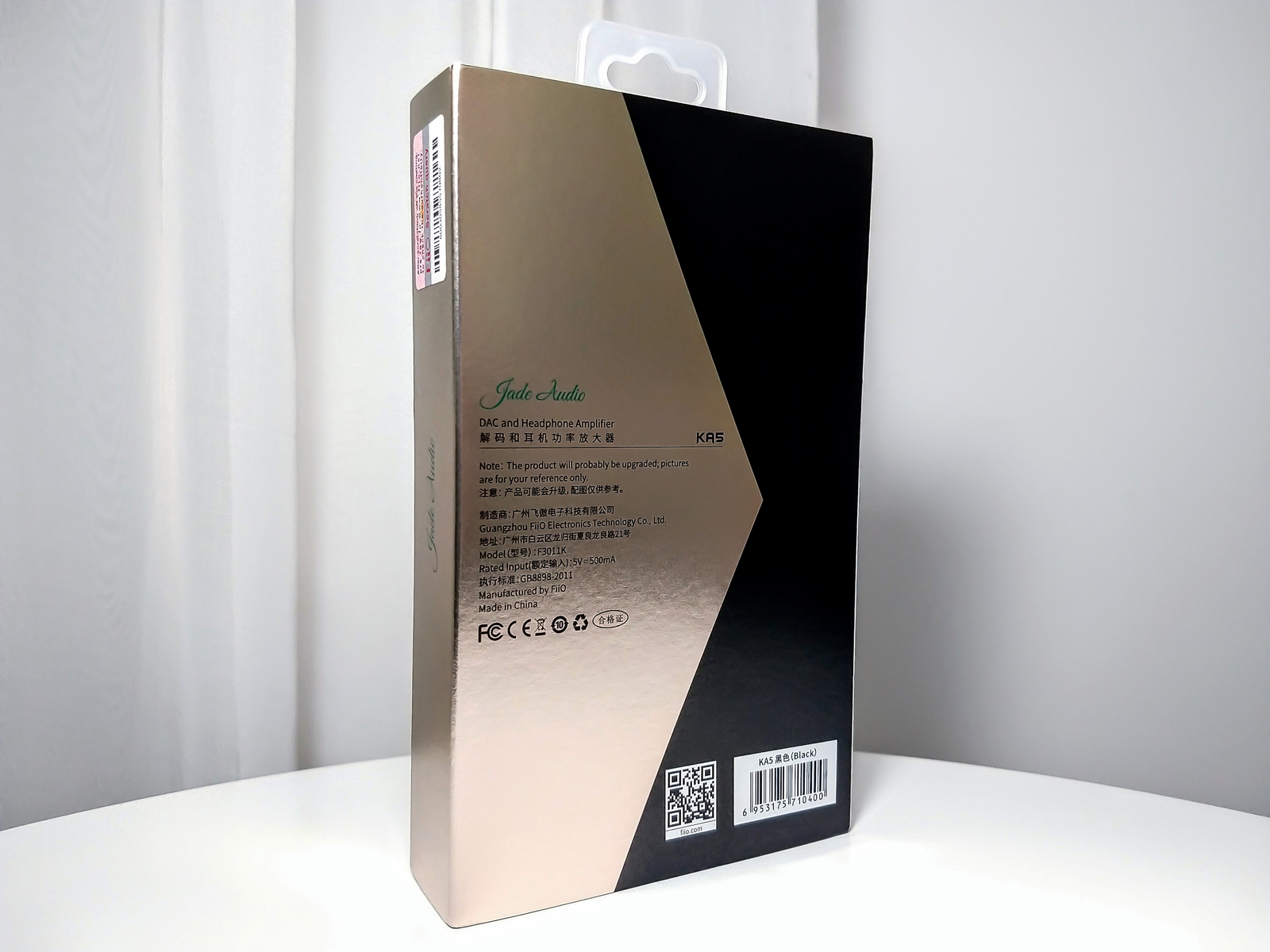
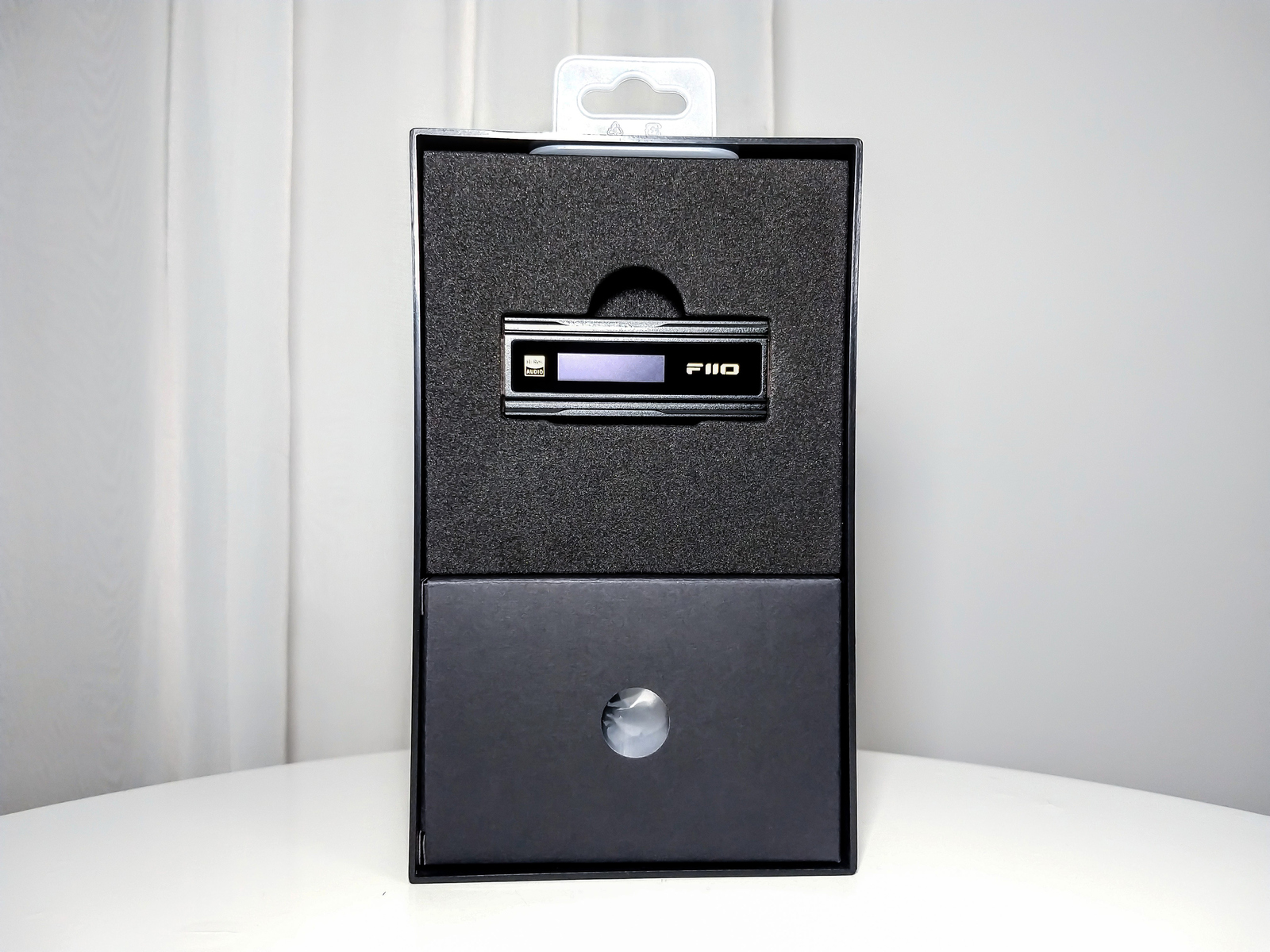
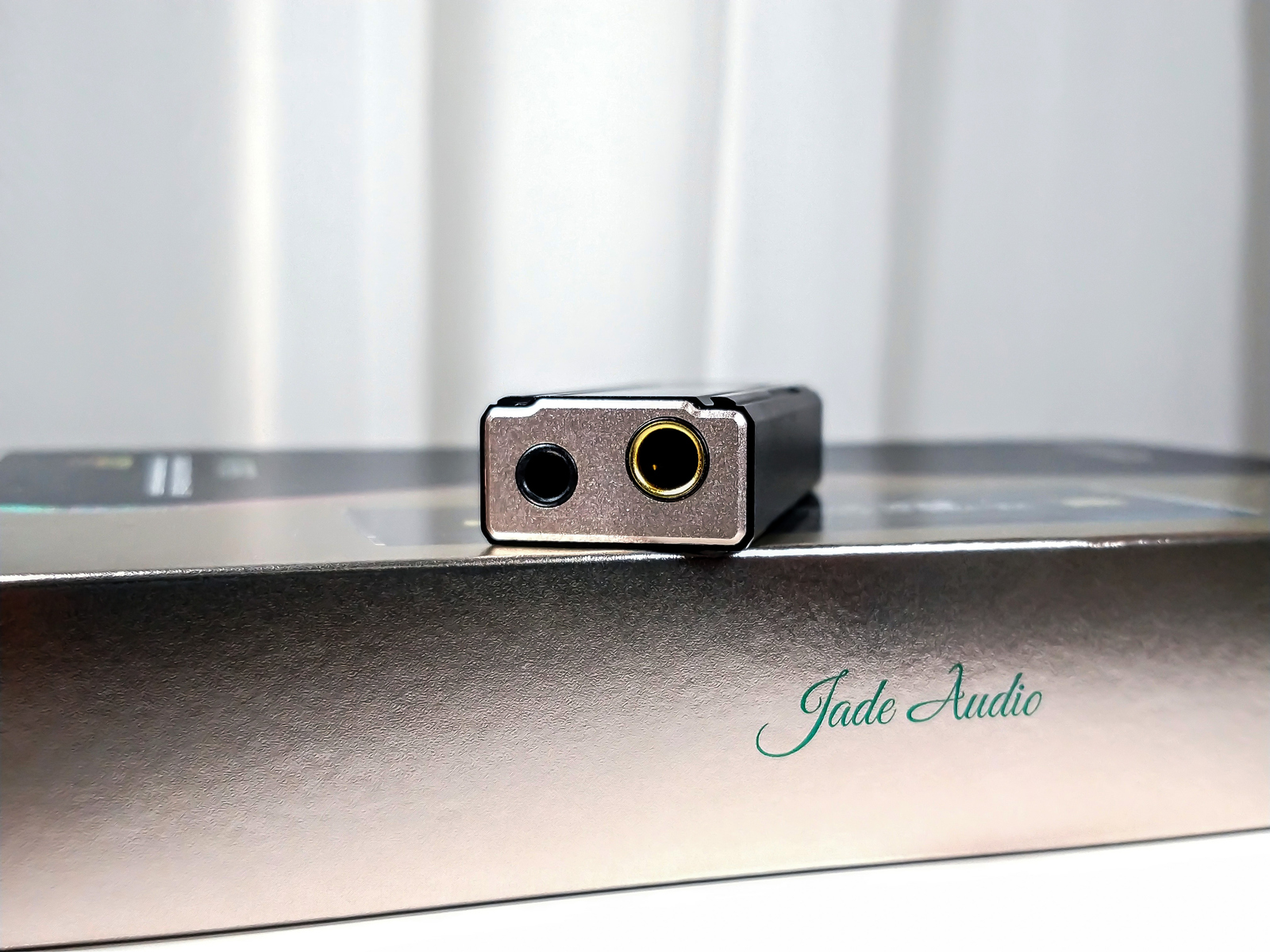
Following the timeline of FiiO USB dongles, the FiiO KA5 DAC/AMP dongle is the latest release and also the company’s flagship. The dongle has the 3.5mm SE and 4.4mm balanced outputs, as well as an OLED display to access the equipment settings.
Official price: $129,99 USD
FiiO’s previous reviews: JD7 (in english), FH3, KA1, HS18 (in portuguese)
FIIO store:
https://s.click.aliexpress.com/e/_c4D2PrAP
https://s.click.aliexpress.com/e/_c3o5XZzV
SPECIFICATIONS:
| General Specifications | |||
| Name/Model | KA5 | DAC chip | Cirrus Logic Dual CS43198 |
| Color | Black/White | OP-AMP | SGM Dual 8261-5 |
| Weight | About 19g | Headphone impedance | PO: 16~150Ω |
| Sampling rate display | OLED display | BAL: 16~300Ω | |
| balanced output interface | 4.4mm socket | support DSD | DSD64/128/256 |
| Max sampling rate support | 768K/32bit | Firmware upgrade | The system firmware can be upgraded using USB |
| DSD64/128/256 | FiiO control | Supported | |
| 192K/32bit (Coaxial) | Dimensions | About 56.3*22*12mm | |
| Buttons and Ports | |||
| USB | Type-C USB | 3.5mm port | Shared single-ended/SPDIF out |
| Buttons | Menu selecting, function setting, volume adjusting, song switching | 4.4mm port | Balanced out |
| OLED display | Displays sampling rate and working state | ||
| Audio Parameters | |||
| Parts of performance parameters of headphone out (3.5mm) | |||
| Output power | L+R≥136mW+136mW (16Ω, THD+N<1%, USB IN) | Max output voltage | ≥1.99V (32Ω, THD+N<1%) |
| L+R≥122mW+122mW (32Ω, THD+N<1%, USB IN) | ≥2V (600Ω, THD+N<1%) | ||
| L+R≥13.5mW+13.5mW (300Ω, THD+N<1%, USB IN) | Output impedance | <0.3Ω | |
| Frequency response | 20Hz~20kHz, crosstalk≤0.1dB | Channel crosstalk | ≥72dB (1kHz, 32Ω) |
| 20Hz~50kHz, crosstalk≤0.2dB | Noise floor | 1.6uV&1.0uV”A” | |
| THD+N | <0.00037% (0dB, 32Ω) | SNR | ≥124dB (32Ω, A-weighted) |
| <0.00035% (0dB, 600Ω) | ≥126dB (600Ω, A-weighted) | ||
| Parts of performance parameters of headphone out (4.4mm) | |||
| output power | L+R≥154mW+154mW (16Ω, THD+N<1%.USB IN) | peak output voltage | ≥2.9V (32Ω, THD+N<1%) |
| L+R≥265mW+265mW (32Ω, THD+N<1%, USB IN) | ≥4V (600Ω, THD+N<1%) | ||
| L+R≥54mW+54mW (300Ω, THD+N<1%, USB IN) | output impedance | <0.35Ω | |
| frequency response | 20Hz~20kHz, crosstalk≤0.1dB | channel separation | ≥115dB (1kHz, 32Ω) |
| 20Hz~50kHz, crosstalk≤0.2dB | bottom noise | 1.8uV&1.1uV”A” | |
| distortion | <0.00037% (-6dB, 32Ω) | signal-to-noise ratio | ≥128dB (32Ω A-weighted) |
| <0.00024% (0dB, 600Ω) | ≥130dB (600Ω A-weighted) | ||
DEVICES USED:
– FiiO FH3
– FiiO JD7
– Tin HiFi P1
– Questyle M15
– MotoZ3Play
– Dell Inspiron (W10)


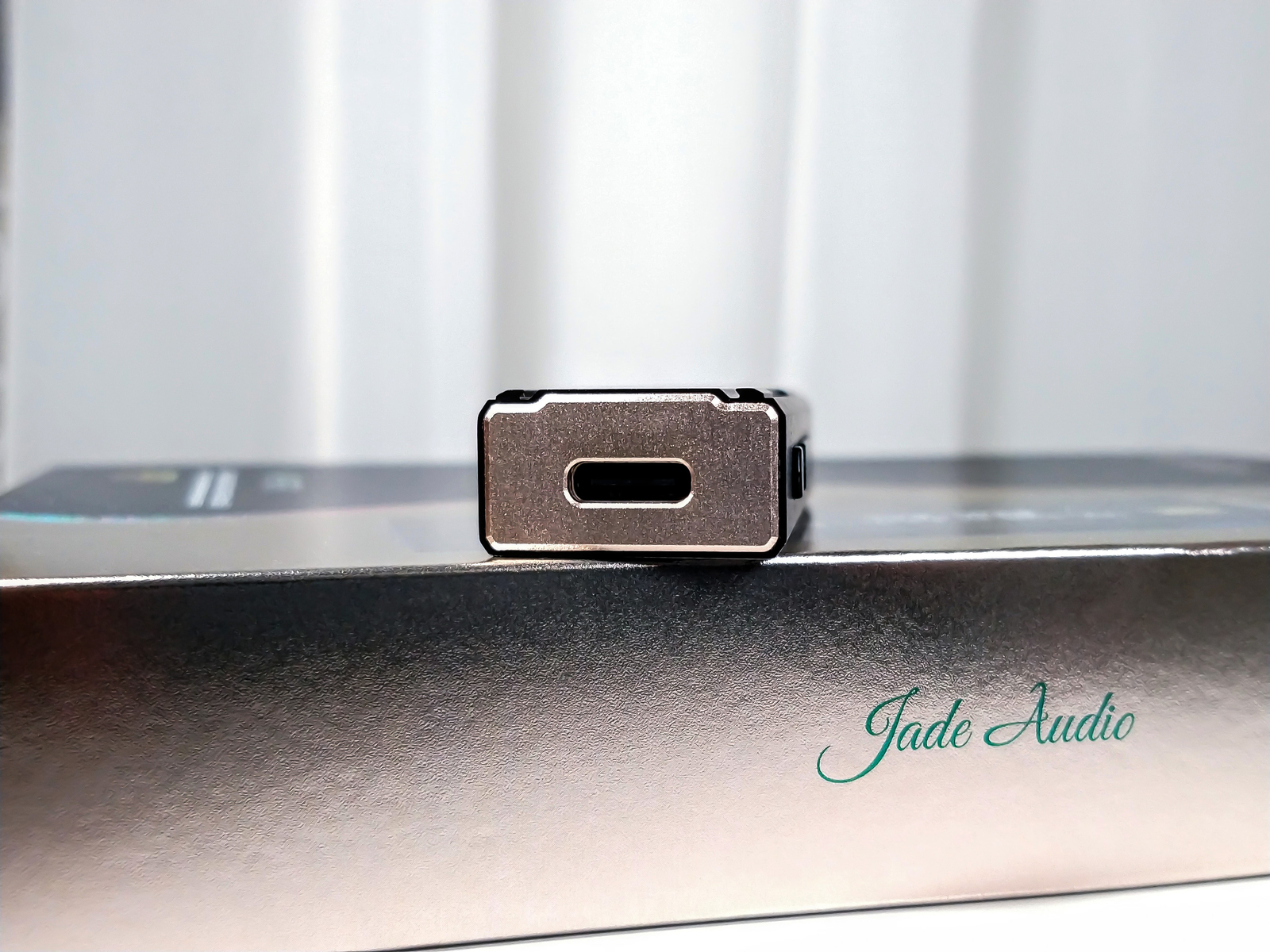

PHYSICAL ASPECTS:
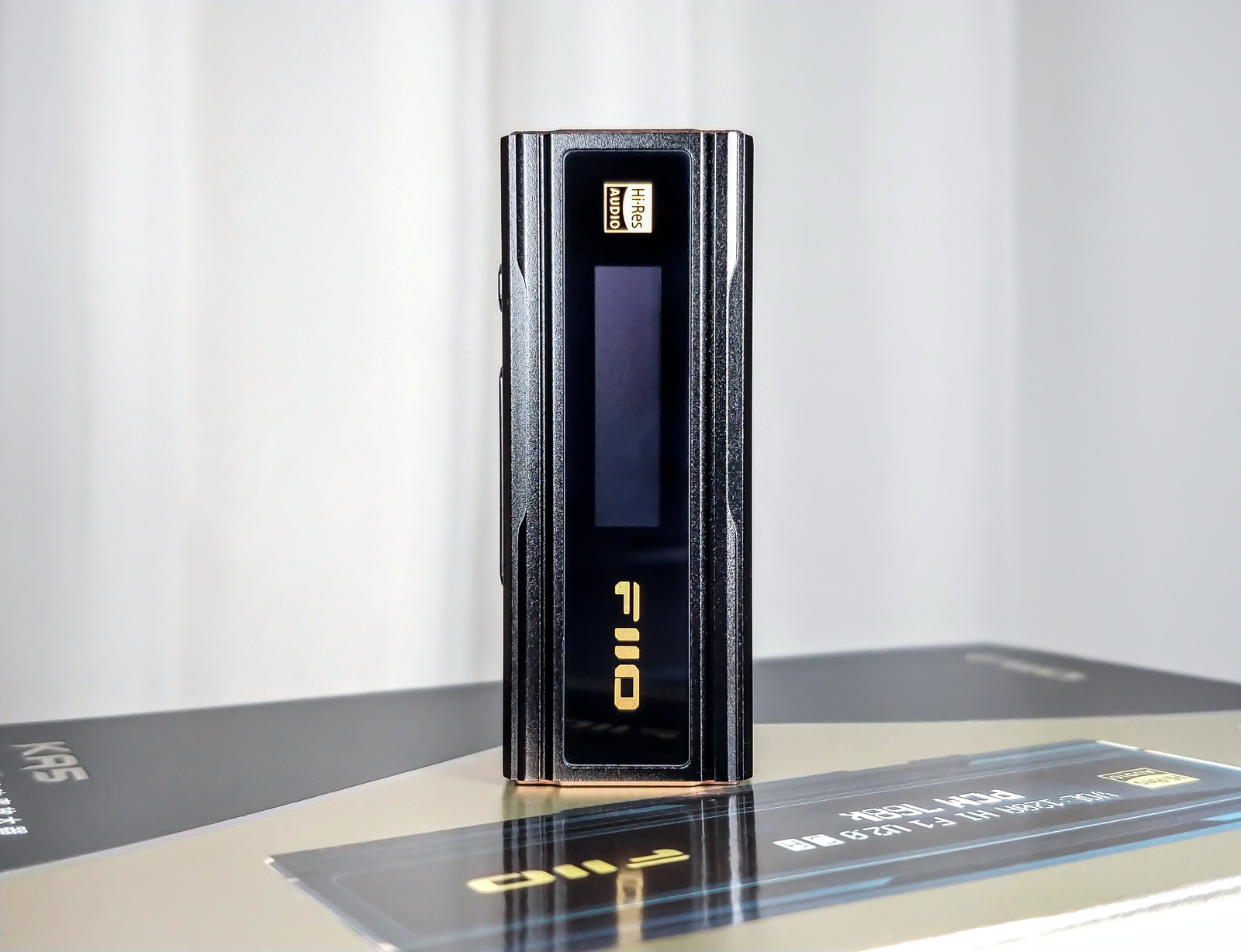
Let’s talk about the KA5’s build. The dongle is coated with metal (aluminum alloy) and has glass on the top surface and in the bottom surface. The side buttons of the product I believe are made of plastic, I couldn’t be sure because they are very similar to the body’s dongle. The positive point of the buttons is that they don’t make noise if you shake the product, they are firm.
The design is very elegant and futuristic, although this is a personal perception, but I liked. Now, I already mentioned this in the KA1’s review as well, FiiO dongles have some “creases” on the surface that I always think it could accumulate some dust/specks there, it’s evident that the company won’t think too much about it to not change the aesthetics of the product. The dongle is very light and small too, excellent for portability. They have no sharp edges, all edges are very well polished.
Display. One of the big differentials of this dongle is having an OLED screen to be able to change the settings. The equipment has several features, and I think that to change so many configs this was the most appropriate solution. On the display we have the following information: Sample rate and file type, volume levels and selected volume mode, High Gain or Low Gain, selected digital filters, selected UAC mode, S/PDIF on/off, and buttons control mode. To turn the display on or off, just press the main button twice.
The KA5 has an independent volume control, that is, you can put a volume on the dongle and a different one on the source (computer, smartphone), one doesn’t control the other. So the configuration is up to the user, for example I set the KA5 at the maximum and I only control the volume using the Windows volume scale, because it’s easier for me, but it may be that for someone else it’s more interesting to use the dongle volume as the main.
FiiO Control App. FiiO provides an App for Android and iOS, through which it’s possible to control some of the features available on the dongle. I’ll take advantage of the App screenshots to detail the features available in KA5.
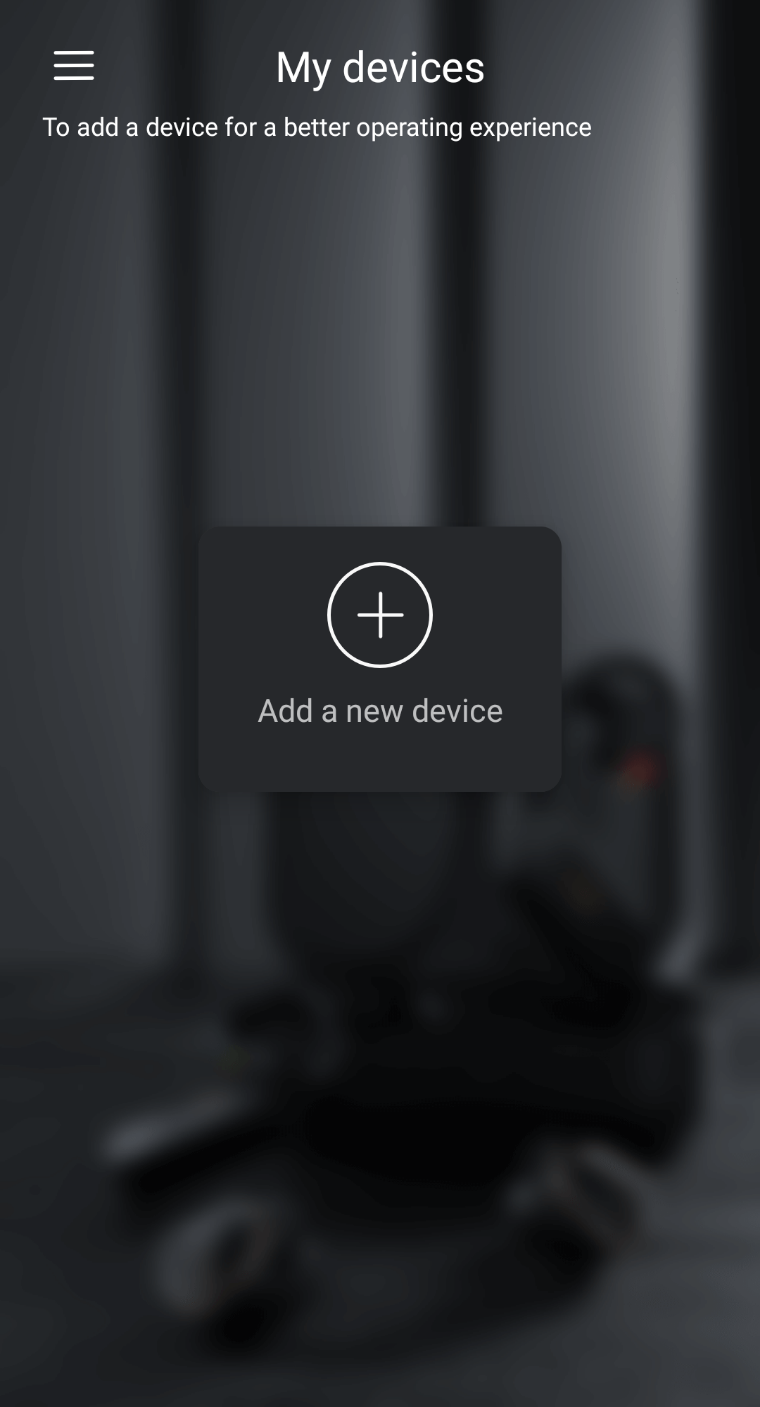
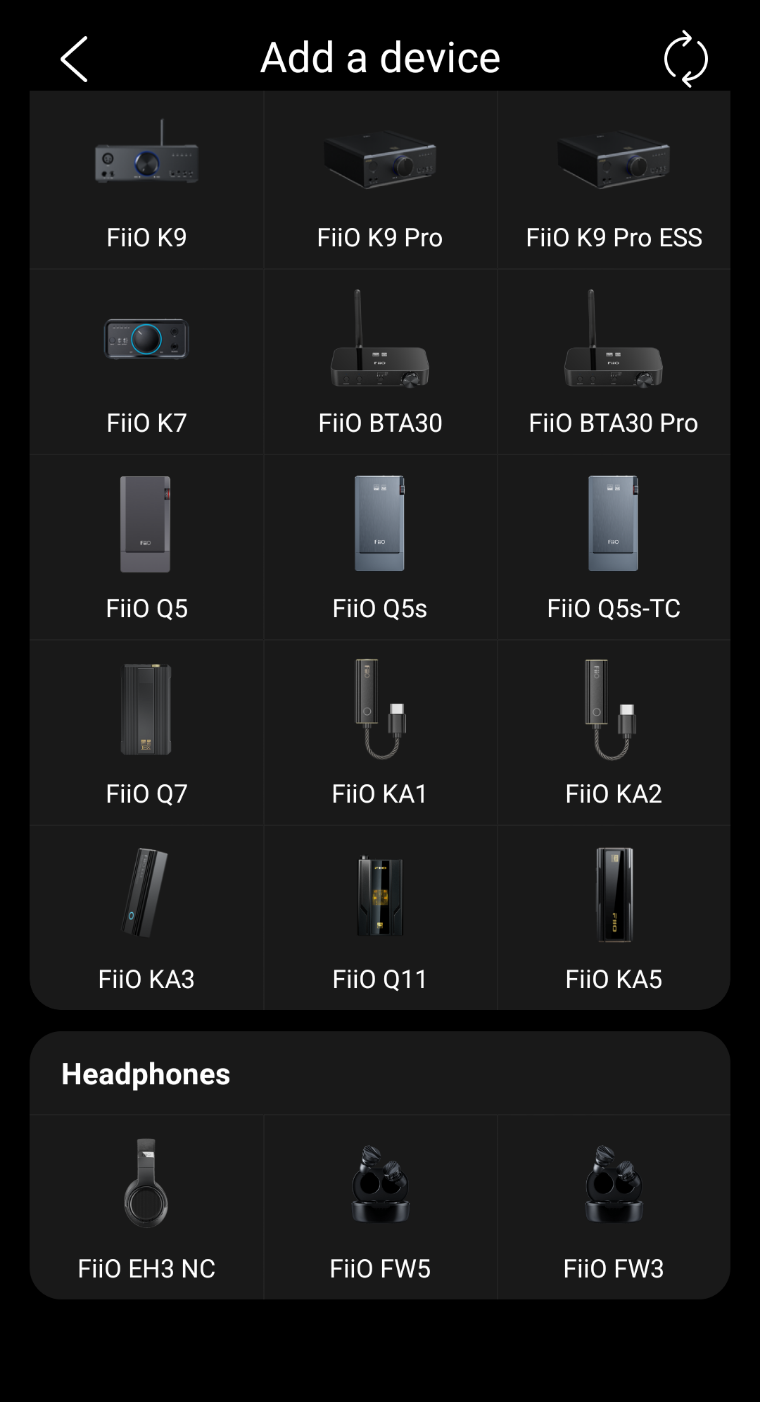
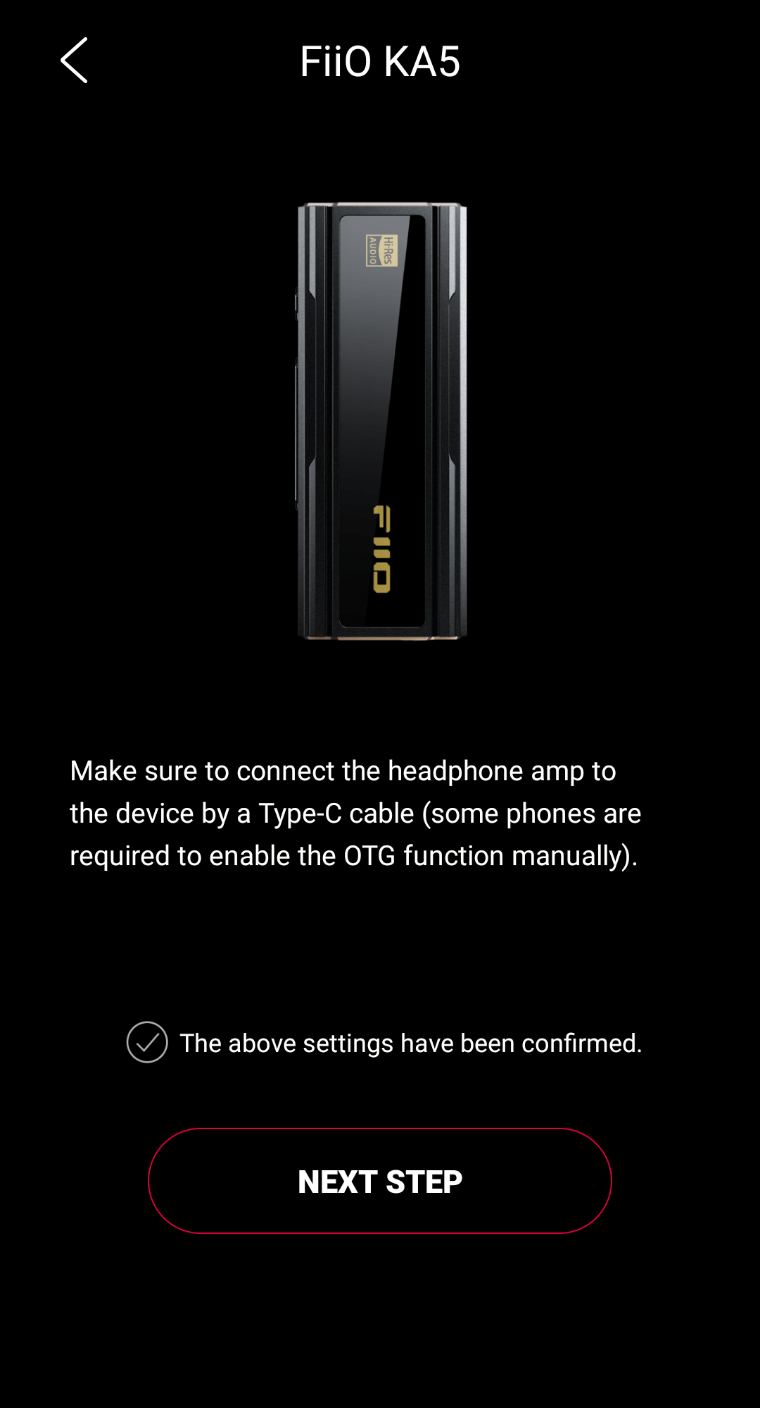

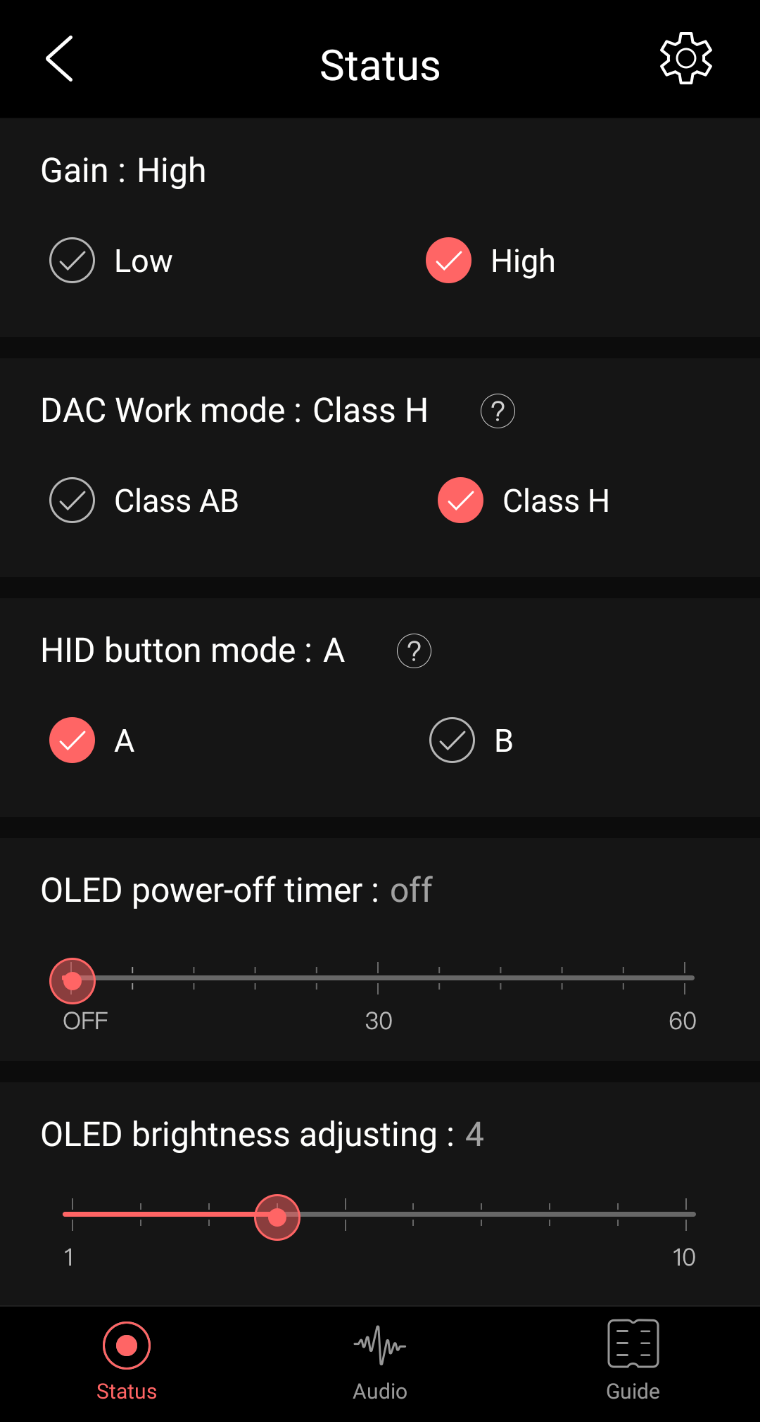
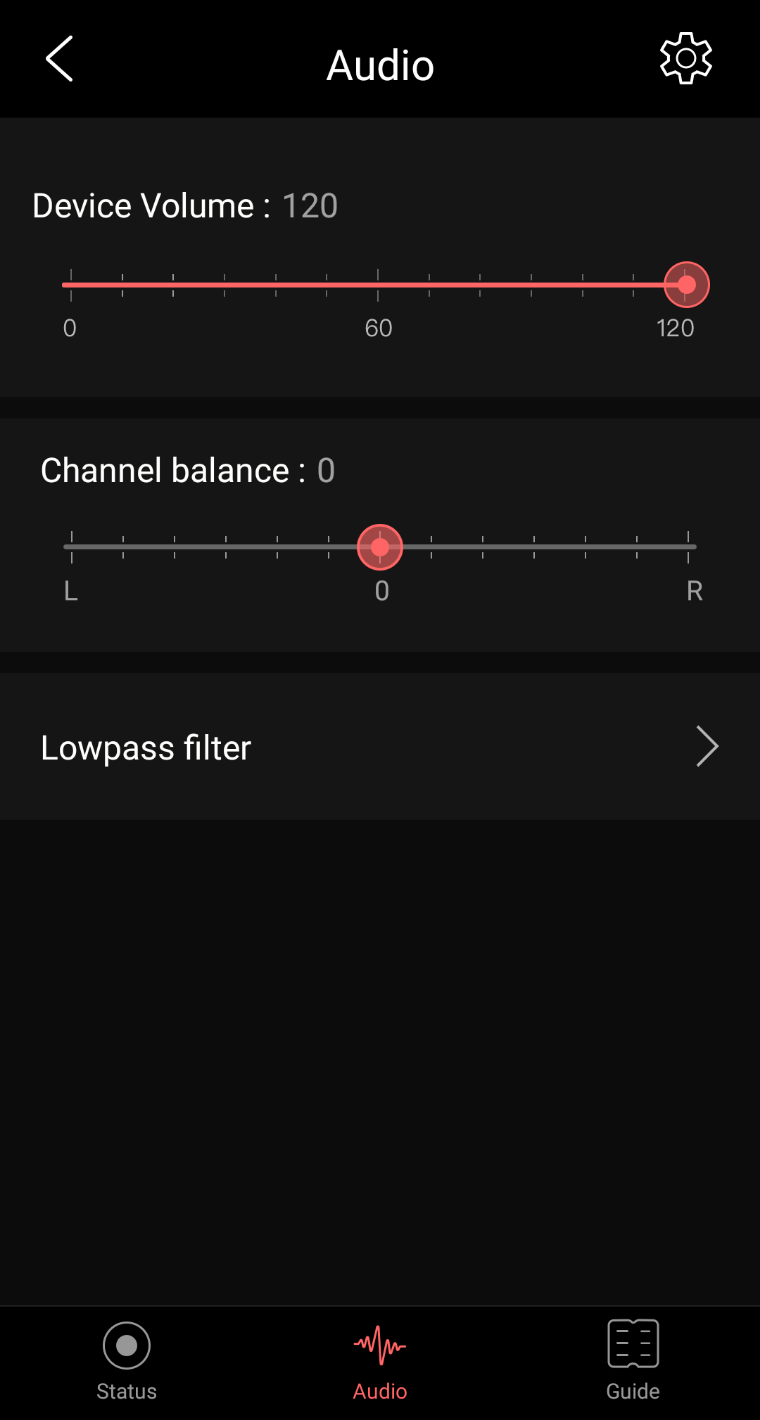
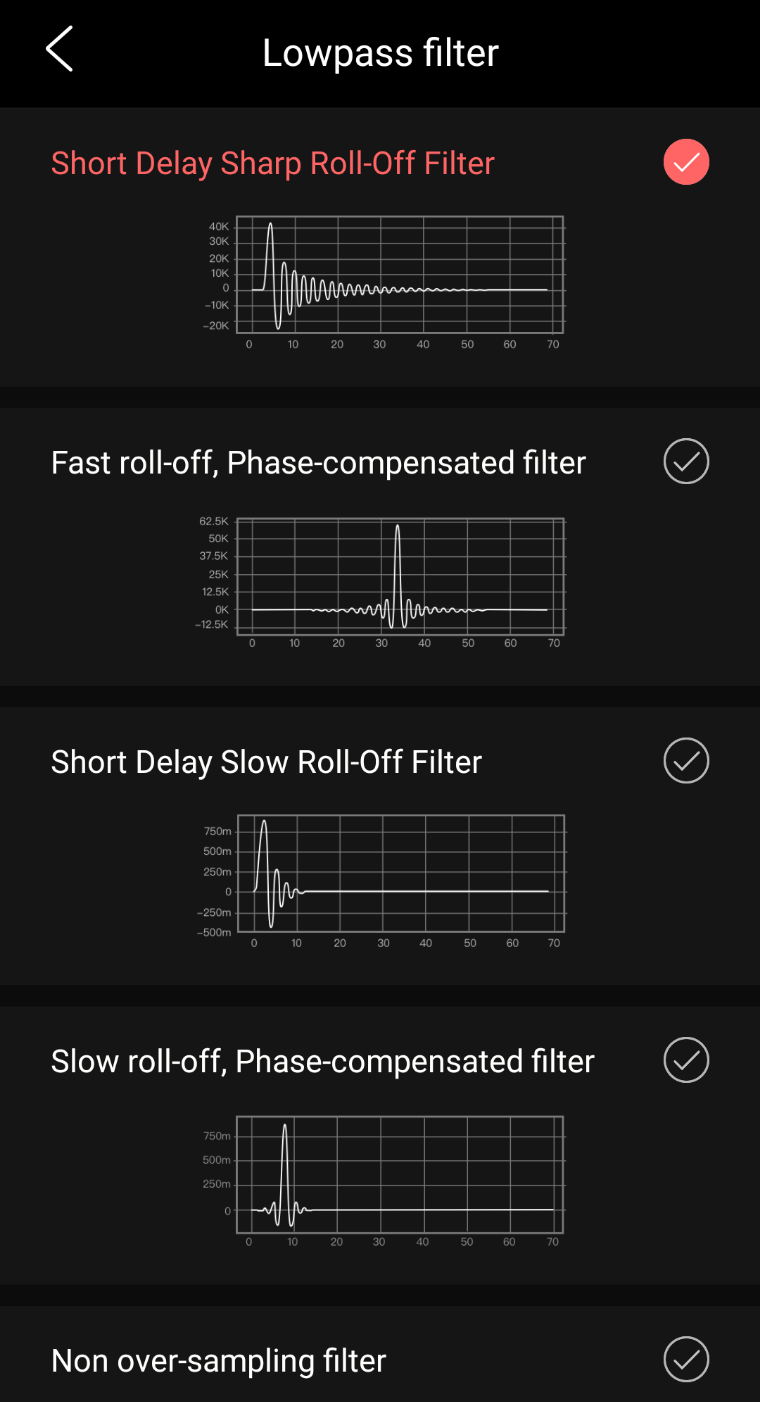

The features available in KA5 are:
-Change the gain: High or Low gain
-Enable or disable the S/PDIF function: if you need to make a connection with a 3.5mm to RCA cable
-Dimmer. Adjust display brightness: from 1 to 10 levels of intensity
-Timer to turn off the display: from 1 to 60 seconds, or never turn off
-Rotate the display information by 180°
-Volume Control: A – 120 steps, B – 60 steps
-Choose volume behavior: Mode A (1 by 1), Mode B (fast forward)
-Increase or decrease the volume
-Change digital filters: 5 options
-Adjust the balance between channels: left and right
-Dac mode Cass H or Class AB: changes the power efficiency mode of the amplifier
-Hardware mute: Prevents some unwanted sounds when switching tracks
The KA5 also has the option to change the USB Audio Class (UAC) from 1.0 to 2.0.
While I’m writing this review, the KA5 doesn’t have any firmware updates available. If this happens in the future, this page provides the necessary information: https://www.fiio.com/KA5_FAQ
Battery consumption on 3.5mm output. Using the FiiO JD7, the battery consumption was 13% The smartphone I used has a 3.000mAh battery. The test was performed during 1hour of playback with the screen off and WiFi off (airplane mode). The KA5’s screen was also turned off for the test. The volume was set at level 10 out of 15 available by Android. The dongle was at max volume. 120 steps and in High Gain mode (with gain on).
Battery consumption on 4.4mm output. Using the Tin HiFi P1 (OG), the battery consumption was 17%. The test was carried out along the same lines as the previous one, the only difference being the volume at level 12 of the 15 available on Android. Have in mind that this is a simple test just to get a baseline, these aren’t extremely accurate numbers, my smartphone’s battery isn’t in the best conditions either…
Heating. During the time that I’m evaluating the battery consumption, I’m also evaluating the surface of the product to see if it is heating up disproportionately. On the 3.5mm output, the dongle got a little warmed up, something subtle, I consider it as normal, nothing out of context. On the 4.4mm output, the surface temperature was almost the same as when using the 3.5mm output, maybe a tiny more warm, but no differences as a whole.
Accessories. Of included accessories, the KA5 comes with a USB-C<>USB-C cable, another USB-C<>Lightning cable, and a USB-C<>USB-A adapter. The quality of the cables is great, they are made of Paracord and this is the best material for this type of cable (in my opinion). I think the kit was very complete, it manages to contemplate the main USB ports. They could have put an exclusive cable for the USB-C<>USB-A connection, which in my opinion the kit would be even more complete, although the adapter was also providential.
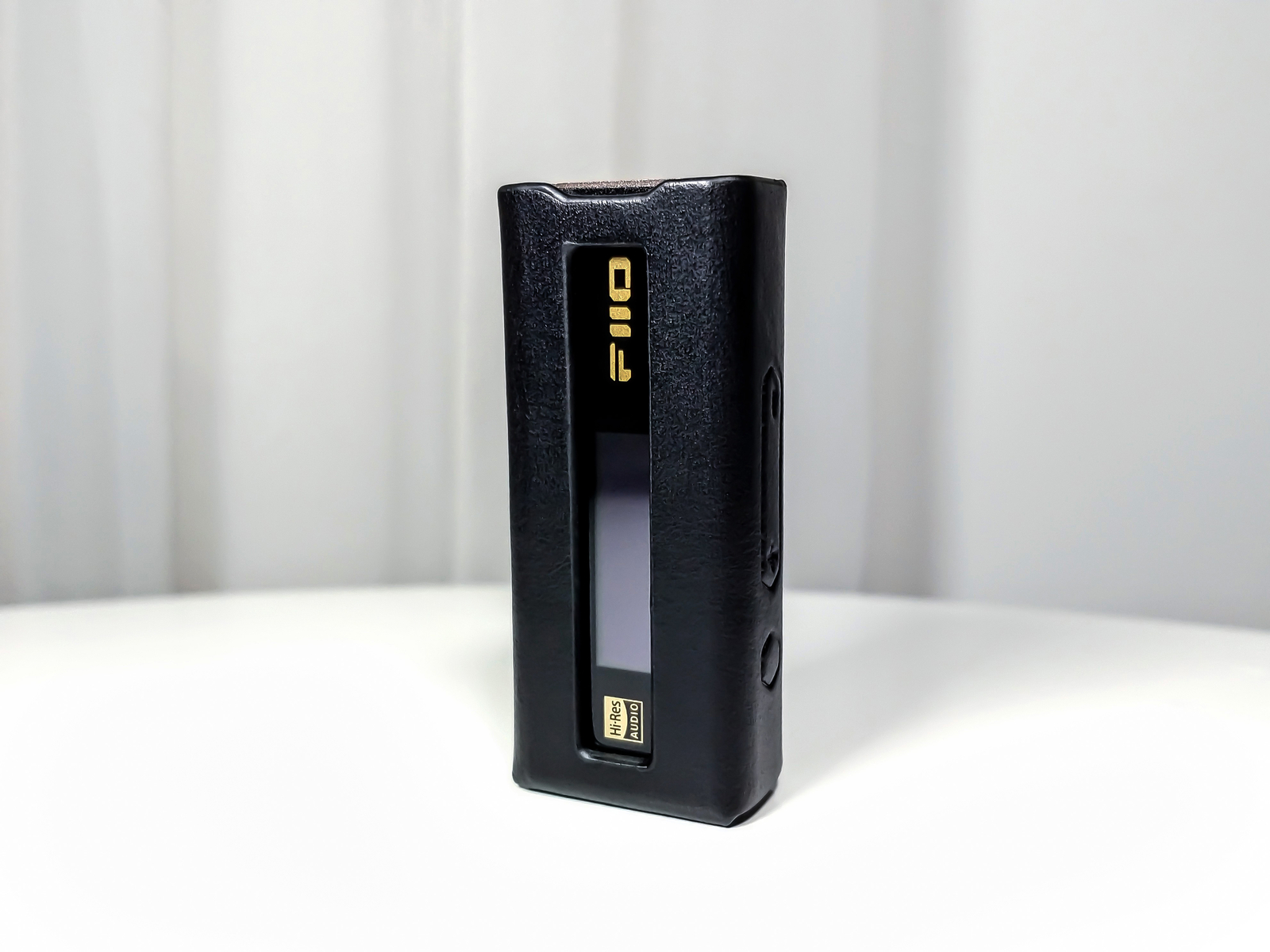
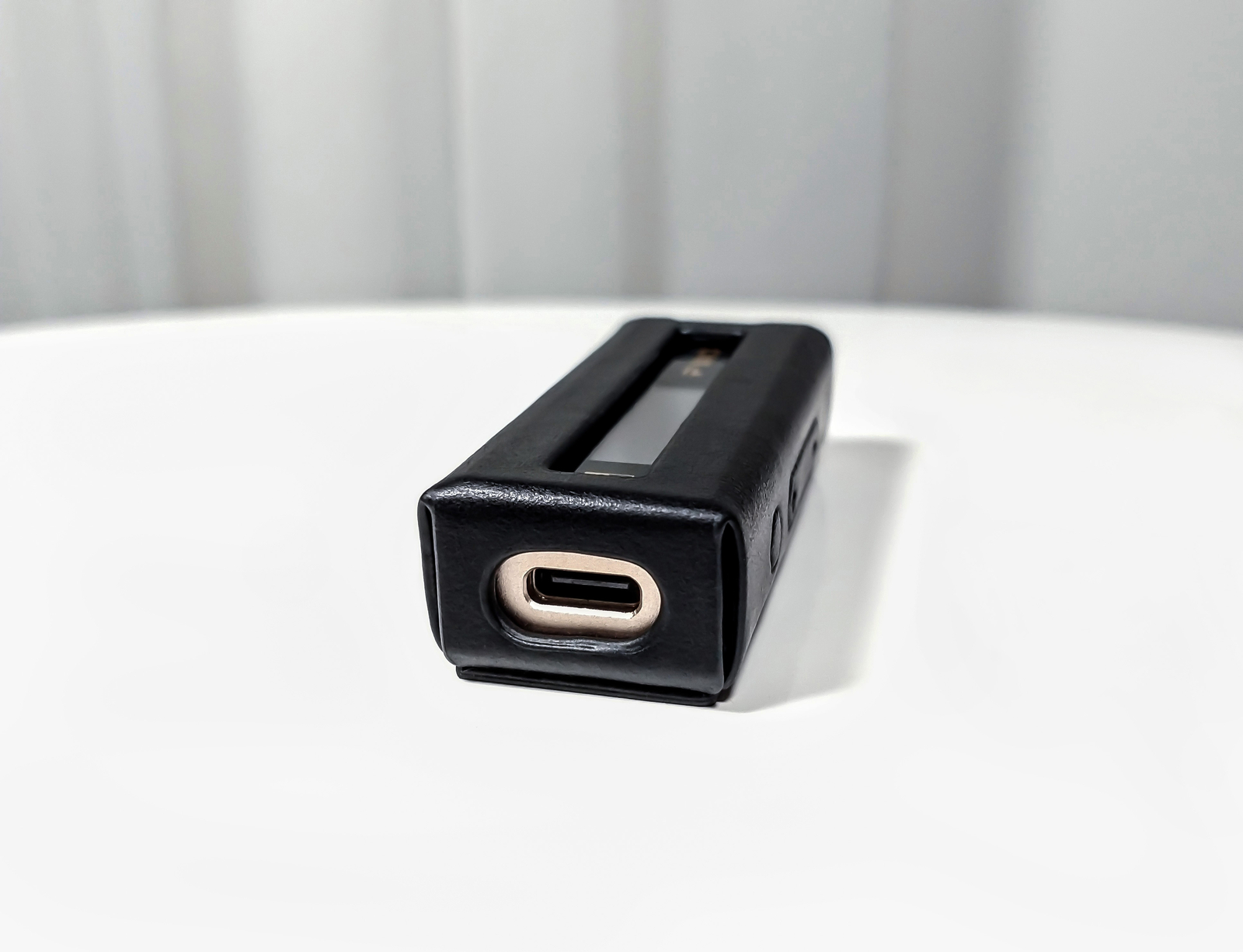
SK-KA5 Case (protective cover). Another accessory that the dongle has is a protective cover made of synthetic leather, the product is named “SK-KA5”. The accessory is very well made, both in quality and in design, usability has not been compromised at any time, it’s possible to see the screen, control the buttons, and connect the cables of the respective inputs and outputs. It’s worth having the KA5 with the SK-KA5 together. You can buy the case together with the KA5 at the time of purchase, or buy each one separately, on the product page you have this option to choose from. Here is the product link for those who want to take a look: https://pt.aliexpress.com/item/1005005499149301.html



SOUND ASPECTS:
It must be remembered that this analysis is subjective, based on my experience with the product and also on the synergy with the other equipments I used here. I also already inform you that the more objectivist part of the hobby isn’t really my beach, so it may be that some information is limited, I’m not an expert in the technical side of this type of product.
The audio quality of the FiiO KA5 is excellent. According to the company, the DAC chip used in the dongle was from the company Cirrus Logic, model CS43198. The KA5 was implemented with two DAC chips to run the balanced system on the 4.4mm output, so the CS43198*2 is precisely to elucidate this duplication. The sound I could hear with the KA5 was excellent, I found the performance of the dongle very good, 100% transparency, definition, clarity and detail. I didn’t notice any distortion, coloration, noise floor or strange sound during the time that I was testing the dongle.
High Gain and Low Gain. The KA5’s gain feature is very functional, in High Gain it’s possible to feel that the sound gains more expansiveness, the bass is more vigorous, it increases the feeling of spatiality in the songs. In fact, not all IEMs will scale with more gain activated, some can even make the sound worse, I don’t have any sensitive IEM right now to do the test, so I preferred to always set the KA5 on High Gain and control only the volume. With the JD7, FH3 and P1 I didn’t have any issues, on the contrary, the sound in High Gain was even better (to my ears).
Analyzing the amplification capacity of the KA5, for me the dongle was able to push the Tin P1 on the balanced 4.4mm output in High Gain mode, basically what I reported in the paragraph above happened. Lately all dongles with 4.4mm output are showing the ability to amplify the P1 (to my ears). As for the 3.5mm output, both the JD7 and the FH3 are easy to push IEMs, so I can say that the single ended output capacity is also good, it will play a large amount of IEMs without having to worry.
About the digital filters available in the equipment. Honestly I didn’t hear any difference between them, this isn’t the first DAC/AMP that has this type of filter and I couldn’t distinguish changes in the sound either. Another feature available on the KA5 is H-DEPOP, it prevents some unwanted sounds from appearing when switching tracks. I also didn’t notice any change in the sound while I did the tests, with the feature activated or deactivated, the playback of the songs occurred without problems. Perhaps the necessary situation has not appeared for the feature to take effect. The good thing is that the more features, the better it is.
Comparative: Questyle M15 x FiiO KA5

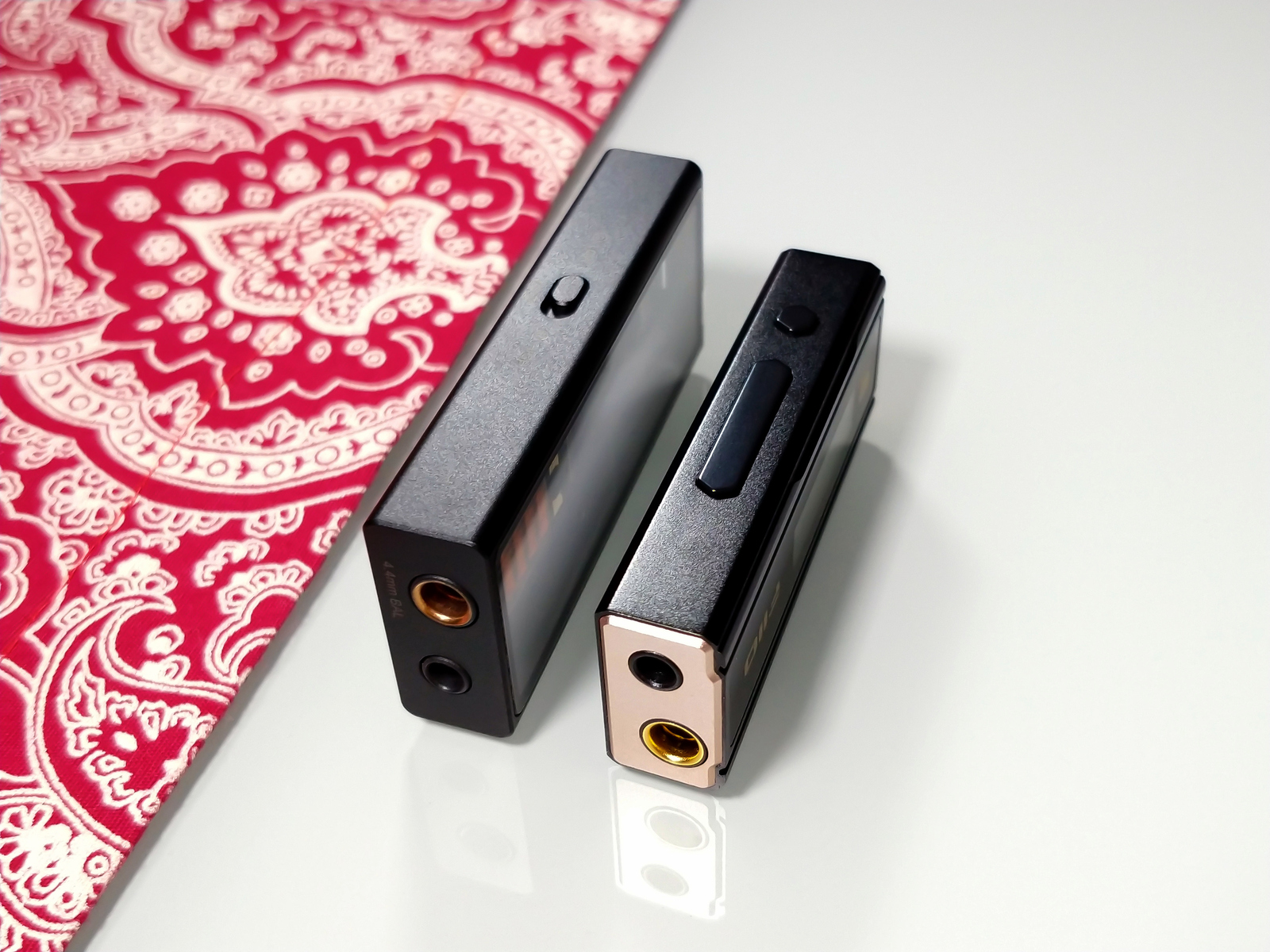


This comparison will be something very quick, I didn’t have much time to do a more detailed analysis between the two devices. I say this because on the same day I made the comparison, I was saying goodbye to the M15 and opting for the KA5 as the new DAC/AMP for my next evaluations.
In physical terms, the KA5 is a little smaller, narrower, which makes it even more minimalist than the M15. By weight, I can’t tell the differences, I’m referring to the feeling of handling, for me both are very light. Both have glass on the surface, but the M15 ends up needing more care, as the glass is the product’s eye-catcher. The KA5 has much more features than the M15, the KA5 has a volume control button and play/pause directly on the body’s dongle, the M15 only has a gain selector switch. The M15’s cables are thicker, which gives the impression of being more durable/resistant, although the KA5’s are also good. The M15 plays MQA, the KA5 doesn’t. Both have a synthetic leather protective cover (sold separately).
Amplification. Using the FiiO FH3 on the 3.5mm output of the dongles, for me they have basically the same performance, both in low gain and in high gain. The FH3 is an easy-to-push IEM and has always played well on simpler sources or less “strong” dongles. In terms of volume, it’s even difficult to do a complete test, because in the range of 40-50% – with both dongles – I already think that the sound is at a very high volume and I can’t go beyond that to not affect my hearing.
Using the Tin P1, I noticed that at the 4.4mm output and with both dongles on high gain, the KA5 performed better, because I could put the maximum volume and the sound didn’t present distortion. On the M15, when I set the high gain to max, it’s noticeable that there is a bit of distortion in the sound. But this is something I had already mentioned in my M15 review, so it’s nothing new. I’m hardly going to listen to music at maximum volume, it’s just to test the product.
In terms of sound, I thought the KA5 was a little cold/brighter than the M15, and in my opinion this latter was more “neutral”. Other features such as imaging and soundstage, I didn’t notice performance differences from one to the other. It’s evident that these are very tiny differences, and I always think that these differences are only real when you compare the two dongles with the same earphone, if you don’t have another source as a reference the sound will always be the “normal”.

Thank you so much for being here!
Consider follow us on Facebook and Instagram to get all the news!

 )
)

 IEMs and Music